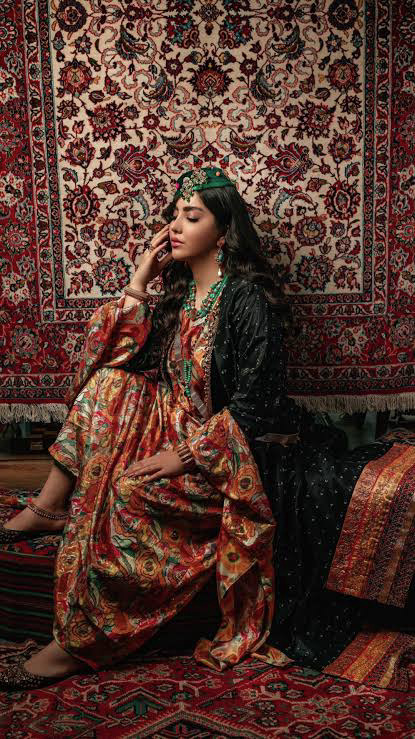
Kurdish culture is rich in tradition, and Kurdish women hold a distinct and respected place within it. One of the most defining elements of their traditional attire is the desmal—the scarf that carries both aesthetic and cultural significance.
Kurdish women’s clothing is considered among the most beautiful traditional garments in the world, with more than 100 variations in colour and design. A defining characteristic of this attire is the use of vibrant fabrics and intricate handicrafts, reflecting the artistry of different regions of Kurdistan. Styles vary according to geography and personal taste, yet all maintain a shared cultural essence. Historically, during times of war, women dressed similarly to men, symbolizing resilience and unity.
The desmal is traditionally made from fabric thinner than the kras (dress), often in white, and is worn over garments such as the kras, kewa, and tasklaw. Draped gracefully over the head and shoulders, it enhances the elegance of the overall attire. Typically triangular in shape, the scarf is tied near the head and allowed to fall over the shoulders and neck, sometimes secured with a knot.
Beyond its decorative function, the desmal also serves as a practical head covering, particularly when made from soft, lightweight material. In folkloric ceremonies and weddings, scarves are an essential accessory, often adorned with tassels to increase their beauty and movement.
Scarves are categorized according to their material and use—ranging from everyday cloth and cleaning scarves to richly designed folkloric scarves worn as part of traditional dress. However, the Kurdish desmal is far more than a simple piece of fabric. It carries its own techniques of design, patterns, and terminology that remain meaningful among women today.
The desmal continues to symbolize elegance, cultural identity, and the enduring heritage of Kurdish women.