
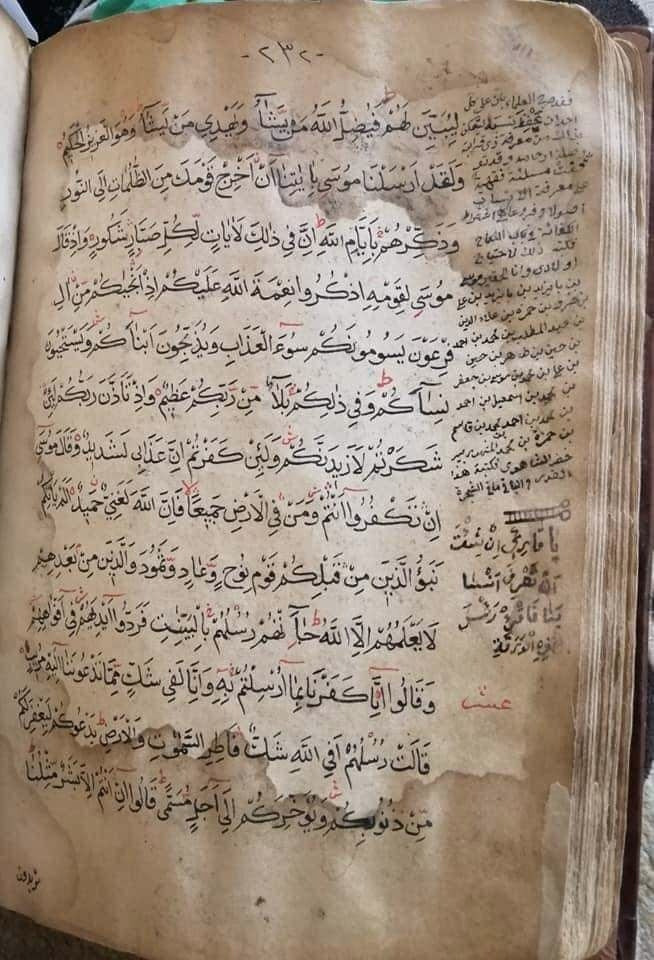
From a Historical Gem to a Catalyst for Religious Tourism in Sharbazher
Introduction
In the contemporary world of tourism marketing, religious and cultural landmarks are no longer viewed merely as historical or folkloric evidence. Instead, they are seen as primary drivers for revitalizing local economies and achieving sustainable development. The Kurdistan Region possesses a rich and historic wealth in the industry and preservation of rare manuscripts; chief among these cultural assets is the “Handwritten Quran of Mullah Musa Shabadin.” Due to its antiquity and unique characteristics, this historical masterpiece has granted the Sharbazher region an unparalleled potential to be developed into a strategic hub for religious and cultural tourism on a regional level.
I. Historical Background and Composition of the Manuscript
This Holy Quran is considered the oldest handwritten Quran in Southern Kurdistan, dating back more than 450 years. The transcription process was completed in 1562 AD by the religious scholar Mullah Musa Al-Tawakuli in the village of “Shabadin.” During that era, the lack of printing presses served as a primary incentive for Kurdish scholars and calligraphers in traditional religious schools (Hujras) and Sufi lodges (Khanqahs) to dedicate themselves to the transcription of manuscripts driven by religious devotion.
In terms of its morphological composition, the Quran measures 20 cm in width, 30 cm in length, and 6 cm in thickness. It consists of 587 pages, with each page containing 13 lines. The manuscript is recorded in a clear and beautiful Kufic script, using black and red ink mixed with rose water. A particularly rare academic feature of this work is that the first 15 pages are dedicated to the science of Tajwid (rules of recitation). Furthermore, in the margins of the verses, the author recorded detailed scholarly information regarding religious rulings (Ahkam), different narrations, the virtues of specific verses, and accompanying Hadiths of the Prophet (PBUH). The author also documented the historical and social aspects of his family—including the family tree and endowments (Waqf)—at the beginning of Surah Ibrahim and on the back cover.
Another fascinating aspect for cultural tourists is the story of this manuscript’s survival. Over the past 450 years, the work has repeatedly faced attempts of theft, disappearance, and forced transfer to high-ranking officials of successive governments. However, it has been preserved through the unwavering loyalty of the author’s descendants. Since 1996, this national treasure has been protected by Mullah Sheikh Fateh (son of Sheikh Jamil), one of the descendants of Mullah Musa, in the village of Barey Bichuk in the Sharbazher region. Despite the passage of centuries, its pages remain entirely intact and readable.
II. Integrating Religious, Cultural, and Environmental Tourism
In terms of tourism development, the village of Barey Bichuk possesses a strong foundation of “Tourism Attractiveness.” The village is not only a religious site but also boasts breathtaking nature and unique landscapes that have a long-standing reputation for tourism within the Sulaymaniyah Governorate. This balance between ecotourism and religious tourism provides a suitable ground for branding the region.
To understand how to transform this historical asset into a revenue-generating tourism investment project, one can look at the successful experience of the “Quran of Negel Village” (located between the cities of Sanandaj and Mariwan). In that case, by utilizing the natural and human characteristics of the village, placing the handwritten Quran in a specialized protected glass display, and organizing tourism facilities around it, the area was transformed into a major tourism center. It now attracts thousands of visitors annually, leading to the revitalization of the entire local economy and providing a steady source of income for its residents.
To achieve these economic and cultural objectives in Sharbazher, we propose the following:
Establishing a Protected Mini-Museum: The Quran should be displayed within a standard, climate-controlled, and secure glass showcase in the village.
Infrastructure Development: Improving the roads leading to Barey Bichuk and providing basic services for tourists.
Media Marketing: Transitioning from seasonal television segments about the Quran to a continuous media campaign under the title: “A Journey through History, Culture, and Nature in Sharbazher.”
By: Gharib Ali Salim