
In Kifri Museum, a pink shirt recalls a young woman’s life cut short by Anfal.Strengthening the Social Welfare System
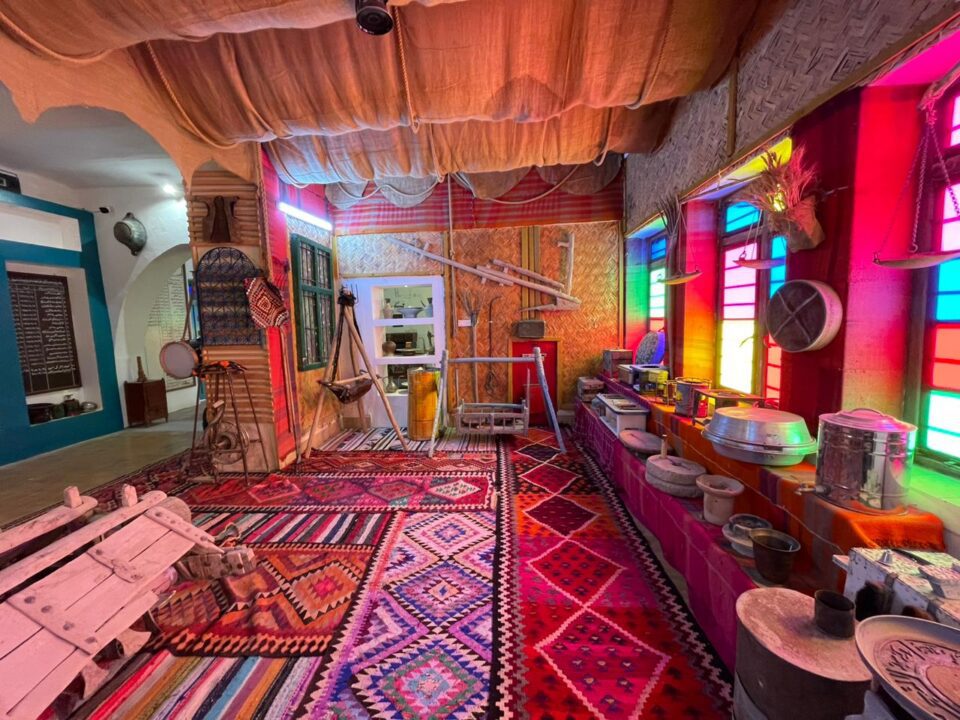
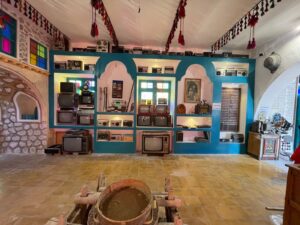
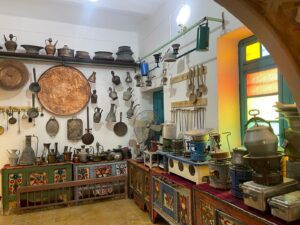
The Kifri Cultural Museum, located on Najib Pasha Baban Street in the western part of Kifri, opened its doors in 2015 inside a century-old building that once served as the city’s post office and communication center. The museum is built around a courtyard with 12 rooms, each one dedicated to a different part of Kurdish heritage. Traditional men’s and women’s clothing fill the rooms with vibrant colors and textures, while other sections display historic radio and television equipment, weaving looms, carpets, rugs, and an array of agricultural tools — from plows and grocery scales to stone mills and sieves. The items range in age from 50 to 200 years, and each holds a story of its own.
The museum has become more than just the largest cultural museum in Kifri; it is a quiet intellectual center where, behind closed doors, dozens of moving stories are carried, retold, and passed on by visitors and the media. Among these stories, one has come to define the museum in the eyes of many: the story of the pink shirt.
This shirt belonged to a young Kurdish woman who, before realizing her dreams, fell victim to the Anfal campaigns. Her story is now remembered as “The Pink Shirt in the Museum of Kifri.” Three days before the Anfal attacks, she had become engaged in a village in the Dawudi area near Kifri. As part of tradition, she took her wedding clothes to a tailor while visiting her sisters in the city. The tailor sewed part of the outfit but left the rest unfinished. When the massacre struck, the young woman and her family were taken. Her fiancé, who happened to be in another location, survived.
The girl’s clothes remained with the tailor, who, like many others, fled the city in fear. Years later, in 1992, he returned to Kifri and searched for her sisters’ homes. By then, they had settled in the city. He handed them the clothes and, with a gesture of dignity, placed the remaining 300 iron fils owed for the tailoring fee inside the sleeve of the pink shirt before giving it back.
From 1988 until 2016, the clothes remained untouched in an old box. That year, Soran Osman, the museum director, opened the box and discovered the garments: shirts, underclothes, and a vest, still carrying the faint scent of musk. The girl’s sisters later entrusted them to the museum so her memory could live on. Before putting them on display, the clothes were treated to protect their shape and color, kept away from sunlight and weather damage. Today, the pink shirt hangs quietly among other garments, each telling its own silent story of loss and survival.
Alongside the pink shirt, the museum also preserves other clothes and personal belongings of Anfal victims. Osman carefully shares these stories with visitors, ensuring that the voices of the past are not forgotten.
Beyond its role as a keeper of Kurdish cultural artifacts, the Kifri Cultural Museum has grown into a vibrant hub of cultural and artistic life. It regularly hosts events such as Shawchara festivals, traditional maqam singing, book launches, food exhibitions, and music performances. It has become a gathering place for people of all ages, welcoming guests and tourists from the Kurdistan Region and beyond.
The museum also works closely with the Education Department of Kifri and Garmian Polytechnic University. Students of all levels visit as part of their learning, turning the museum into a living classroom. In this way, the museum not only safeguards history but also inspires the next generation to carry forward the stories, culture, and identity of Kurdistan.
By Gharib Ali Saleem