
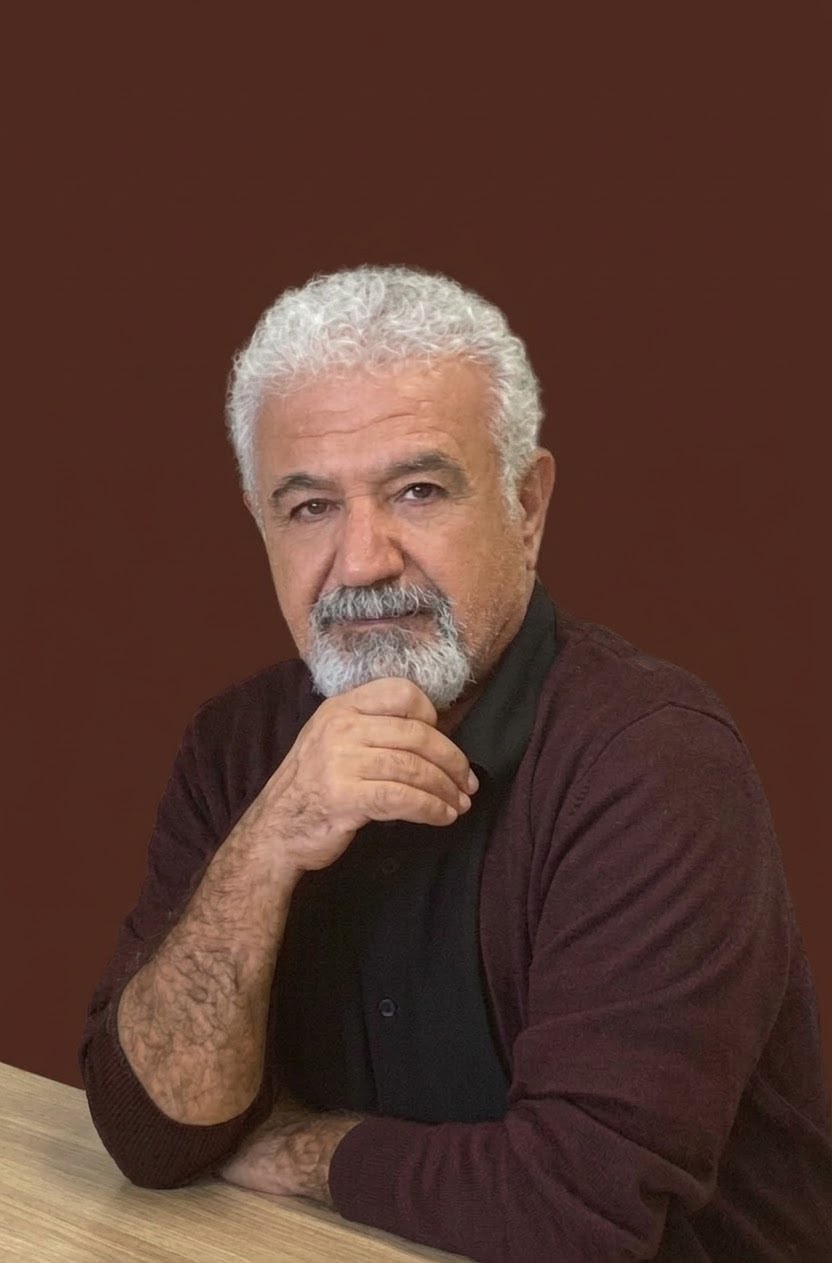
Fereydoon Saman
Like any other language of the world’s peoples, the Kurdish language consists of numerous dialects, sub-dialects, and local vernaculars. Unfortunately, due to the occupation and partition of Kurdistan, its language has still not become a standard language for all communities of the people of Kurdistan. The Kurdish language has passed through several historical and political stages—such as the establishment of the Kurdish Academy of Science (Korî Zanyarî Kurd) and the Kurdistan Writers’ Union in 1970, and later the 1991 Uprising of Southern Kurdistan. Each of these, by its own scholarly and political standards, served as a historical turning point, rescuing the language from the threat of extinction, carrying it safely past the surge of cultural-cleansing policies pursued by the states involved in the Kurdish issue, and bringing it to a safe shore. However, this has not meant—and does not mean—permanent stability or an end to the crises facing this language. Accordingly, although Kurdish has now been spared the threat of extinction, excessive dialectal fragmentation and chaos remain evident within it; this crisis-ridden condition has become a full-length mirror reflecting the lives of its speakers.
Undoubtedly, nationalist discourse has been the main pillar in saving this language from the sinister claws of cultural erasure by those dictatorial and hegemonic governments that once dreamed of creating a pure and homogeneous nation. Today, however, the edifice of that inhumane aspiration has openly and completely collapsed, and those governments have been forced to shift their policies toward superficial brotherhood and cosmetic appeasement—just as Kurdish was officially recognized alongside Arabic in the 2005 Iraqi Constitution, and in Rojava (Western Kurdistan) the Kurdish language has witnessed remarkable growth and advancement in education, schooling, and media. Today, the Kurds are one of the influential actors in the region, and Kurdish is one of those living languages that, even in the absence of an independent Kurdish state, commands a vast and undeniable political and cultural sphere.
What is concerning here is that the ideological manifestation of Kurdish nationalist discourse has still not come to terms with this historical turning point. It continues to view the Kurdish language solely through the binary lens of life and death, and in doing so, it has largely stripped the language of its potential and capacity for scientific development, paving the way for all manner of unscientific interventions—interventions justified under slogans of authenticity, preservation, and enriching the Kurdish language and library.
Certainly, ideology is one of those dangers capable of severing the direct relationship between thought and language. As a prefabricated and sacralized politico-intellectual apparatus, ideology diverts the scientific trajectory of linguistic development and produces a stagnant, confined system of signs that closes the doors of language to growth and renewal. At such a juncture, through the repetition of slogans such as “whatever it is, as long as it’s Kurdish,” language becomes a playground for incompetence and consequently yields weak and sterile texts. For example, following the Uprising—and under the influence of the political, economic, and cultural rivalries among the main political parties of Southern Kurdistan, which led to the mushrooming of dozens of institutions and organizations for Kurdish language, literature, and translation—a deluge of translation overwhelmed the entire sphere of Kurdish language and thought; unfortunately, in the absence of scientific mechanisms and necessary oversight, this continues to the present day. For the identity and existence of a nation, the existence of its language is enough—especially for a nation whose very existence and presence in its own homeland have been denied for centuries.