
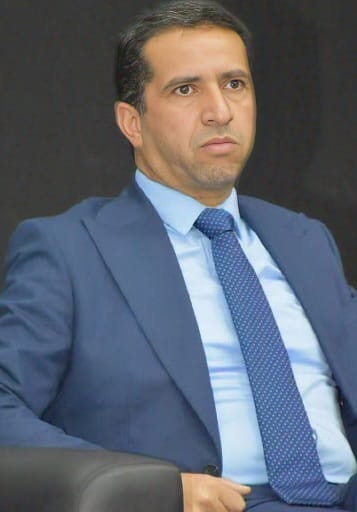
Dr. Hiwa M. Khalil
After more than two years, the Kurdistan Region Parliament has finally been reactivated without the participation of some of its factions, and it managed to secure the legal quorum needed to elect its presidency board. The reopening of parliament was the right step, but it came late. Given that the political forces have failed to reach agreement, other steps should have been taken, and in the Kurdistan Region the reactivation of parliament was one of them. Yet this reopening may also carry negative consequences. Just two days after the election of the parliament’s presidency board, the head of the Patriotic Union of Kurdistan, in a four-minute statement, once again declared a “two-administration” arrangement for the Kurdistan Region. This means that, in the Kurdistan Region, political parties have often divided the nation and the homeland in order to protect their own interests.
What the Kurdistan street expected after the elections was the formation of the tenth cabinet, one that could provide services to citizens and reduce the political rivalry and disputes that existed among the Region’s political parties. However, so far the parties that took part in the elections and hold seats in the Kurdistan Parliament have not succeeded in this step. After two years of negotiations, instead of drawing closer, deeper social and political divisions have emerged. Ultimately, this will come at the expense of the political parties themselves, of citizens, of constitutional authorities and of the strength of the Kurdistan Region. No one will be a winner in this process; all of us will be losers.
In fact, the reactivation of the Kurdistan Parliament is not merely a constitutional and legal matter. It is a major test for all of the Region’s political parties, of how far they can place national and patriotic interests above partisan ones, because in the end, a political party is founded to serve the nation and country, not the other way around. Declaring a two-administration arrangement not only fails to serve the interests of the Kurdistan Region, but also gives regional and international actors a pretext not to treat the Kurdistan Region as a constitutional entity. ‘Two administration’ is a situation that was tried in the past and brought no gains for the Kurdish people in the Kurdistan Region, so an unsuccessful experiment cannot be tried again.
The situation in the Kurdistan Region is such that political disputes directly affect people’s livelihoods and the state of stability. Sidelining any party could lead to the complete paralysis of government work in the areas under that party’s control, create problems in the distribution of salaries and the budget, and heighten tensions between security and military forces. This is a direct threat to public security and stability. Moreover, such a situation opens the door for regional states to occupy the Kurdistan Region by military force with great ease, particularly at a time when Baghdad is at the height of its political and economic weakness and the great powers are preoccupied with the Iran–America and Russia–Ukraine wars.
It is therefore essential that, in this situation, political and academic elites, intellectuals and civil society organizations deal with this unwanted state of affairs with the utmost responsibility, in order to reduce the level of threats and dangers facing the Kurdistan Region to the lowest possible level. This is a historic, moral and patriotic duty, and a responsibility toward both the past and the future of this nation.