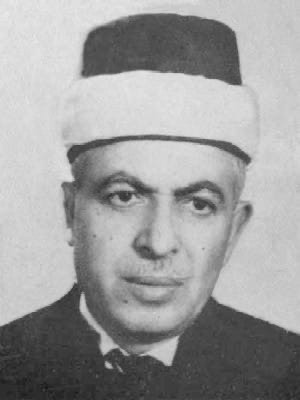
Alaaddin Sajadi remains one of the most influential figures in the history of Kurdish culture, literature, and linguistics. His scholarly and literary contributions have shaped generations of researchers and writers, making his works indispensable references in Kurdish studies.
Born in 1907 under the full name Alaaddin Najmuddin Hisamuddin, historical sources differ regarding his place of birth. Some accounts indicate he was born in the village of Barawi near Berzinja, while others suggest the Qatarchiyan neighborhood of Sanandaj.
Sajadi began his early education in Rawanduz and Balak, where he spent three years studying religious sciences. In 1923, he moved to Sulaymaniyah to continue his studies and became a religious student (faqe) at the Haji Mela Resul Deleja Mosque. There, he further developed his intellectual and scholarly abilities. In 1938, he received his clerical certification (ijaza) from Sheikh Baba Ali Tekye, after which he relocated to Baghdad.
In Baghdad, Sajadi was appointed imam of the Naeema Khatun Mosque in the Al-Midan district. Alongside his religious duties, he played a prominent role in Kurdish journalism and cultural life. Until 1949, he served as deputy editor of the renowned Gelawêzh magazine and was an active member of the Sarkeutan (Success) Club, which served as a gathering point for leading Kurdish intellectuals, poets, and writers of the time.
Sajadi’s academic career further solidified his standing as a leading Kurdish scholar. From 1959 to 1974, he taught Kurdish literature and the history of Kurdish literature at the College of Arts, University of Baghdad. In 1972, he became a member of the Kurdish Academy of Science. Following the collapse of the March 11, 1970 Peace Agreement, he was appointed in 1974 as Secretary-General of Awqaf (Endowments) for the Kurdish Autonomous Region in Erbil, a ministerial-level position.
His literary legacy includes numerous influential works that continue to occupy a central place in Kurdish literature. Among his most notable publications are Rishtey Mrowari (The String of Pearls), a collection of satirical and humorous narratives; The History of Kurdish Literature; Texts of Kurdish Literature; The History of the Kurdish Uprising; Gity Zindawar (The World of Living Creatures); A Journey Through Kurdistan; and The History of Kurdish Prose, among many others.
In his later years, Sajadi’s scholarly activity declined following the death of his eldest son during the Iran–Iraq War (1980–1988), a tragedy that deeply affected him. Alaaddin Sajadi passed away in Baghdad on December 13, 1984, and was laid to rest at the Sheikh Abdul Qadir al-Gilani cemetery.
His enduring legacy continues to illuminate Kurdish literary and intellectual life, securing his place as one of the foremost architects of modern Kurdish cultural thought.