
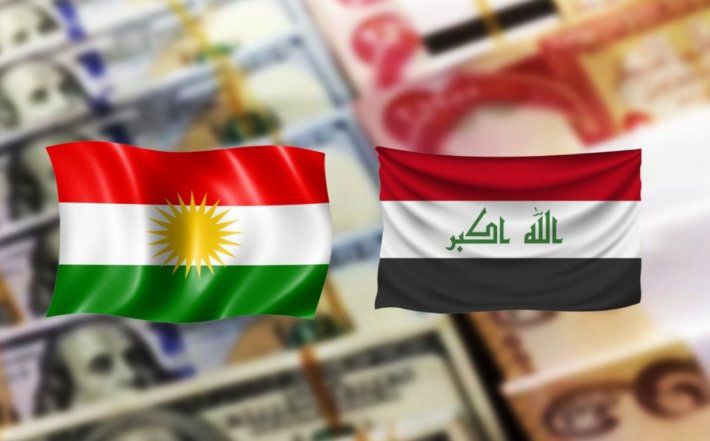
KRG officials accuse Baghdad of violating the constitution by withholding salaries and budget, deepening mistrust and fueling nationwide political backlash.
Baghdad’s policy toward public sector employees in the Kurdistan Region is causing serious concern. The Kurdistan Regional Government (KRG) has issued a statement condemning the legal and constitutional violations committed by the federal government.
Iraq’s federal government has decided to halt the salaries of Kurdistan Region employees, which has triggered widespread concern among political parties and the Kurdish public. Over the past few years, the federal government has consistently imposed political, economic, and financial pressure on the Region, aiming to weaken and marginalize it. This is despite the fact that the Kurdistan Region has served as a pillar of stability and development in Iraq and played a key role in defeating ISIS, stabilizing the region, and hosting internally displaced persons from across Iraq. Instead of cooperation and agreement, the federal government has repeatedly punished the Region through various means.
Sherwan Duberdani, a Member of Parliament from the Kurdistan Democratic Party (KDP), told The Kurdish Globe: “For 11 years, the federal government has withheld the budget and salaries of the people of Kurdistan. Every month they create a new excuse for not sending the salaries—even though the Federal Court ruled that the salaries must be paid without delay and without any conditions.”
He added: “Every month Baghdad’s excuses have failed to hold, and the payroll issues were resolved. A payroll system was established, along with a unified pension law of Iraq and a banking system to manage salary disbursement. At the federal government’s request, permanent records were created, and all employees were registered, but still Baghdad delays salaries every month. Not a single year have they sent all 12 months of salaries to the Region. This is a violation of fairness in governance and a downgrade of the Region compared to other parts of Iraq. In the latest unjust decision, Iraq’s Ministry of Finance decided not to send the salaries for eight months of 2025, despite Kurdistan’s allocated budget being 13 trillion dinars, only 4 billion dinars have been transferred.”
Additionally, in a statement, the KRG said: “Baghdad stopped the international oil exports of the Kurdistan Region on March 25, 2023, which caused both Iraq and the Region to lose $25 billion.” It further noted: “On April 4, 2023, the KRG signed an agreement with Iraq that Kurdistan’s oil would be sold through the SOMO company. Kurdistan delivered 11 million barrels of oil to SOMO, but Iraq has not paid any of the proceeds from this production.”
It also highlighted: “Although Kurdistan has handed over 50% of its oil revenue, Baghdad has withheld the Region’s budget for 11 years. This has halted projects and development in cities—despite the approval of budgets for 2023, 2024, and 2025. Baghdad has also failed to compensate the victims of chemical attacks, genocide, and Anfal campaigns against the Kurds, even though Article 132 of the Constitution mandates it.”
Dr. Sabah Subhi, a member of the Oil and Gas Committee in the Iraqi Parliament, also told The Kurdish Globe: “Iraq not only withholds the salaries and budget of the Kurdistan Region but also obstructs its oil exports. This prevents the Region from revitalizing its economy and paying salaries. Articles 111 and 112 of the Iraqi Constitution grant Kurdistan the right to manage its energy resources. The Region has provided all facilities to meet Iraq’s requirements and signed contracts with companies legally according to Iraqi court rulings. Yet, the Iraqi government creates new barriers to economically weaken the Region and destroy its autonomy—just as it did in 2014.”
He further clarified: “Despite the KRG fulfilling all of Baghdad’s financial and oil-related demands and showing readiness for dialogue in line with constitutional and court rulings, Baghdad continues its sanctions and pressures. The federal government’s hostility toward the Kurdistan Region and its people has become evident both domestically and internationally. This has triggered strong dissatisfaction from Kurdish and Iraqi parties, the presidency of the Iraqi Parliament, and foreign observers and politicians.”
The Kurdish Globe