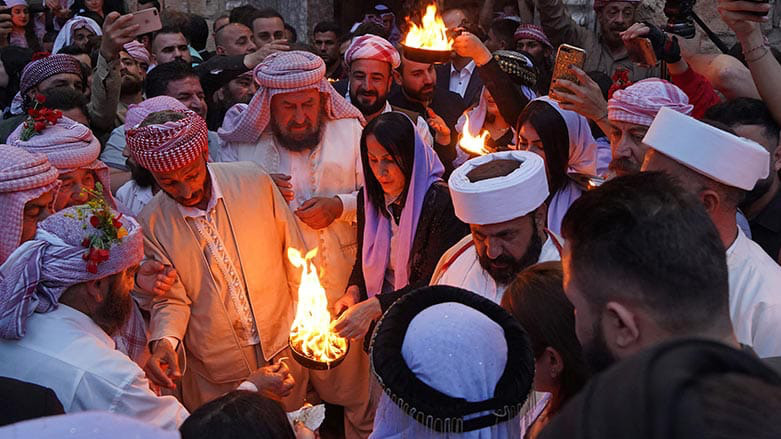
Red Wednesday, known as the Yazidi Kurdish New Year, remains one of the oldest and most sacred celebrations observed by the Yazidi community. According to the Eastern calendar, the festival falls on the first Wednesday of April and is marked each year with distinctive cultural and religious traditions.
The Kurdistan Region officially recognises Red Wednesday as a public holiday, reflecting the region’s broader respect for national and religious occasions. Senior Kurdish leaders, including Masoud Barzani, Kurdistan Region President Nechirvan Barzani, and Prime Minister Masrour Barzani, have each issued messages marking the occasion.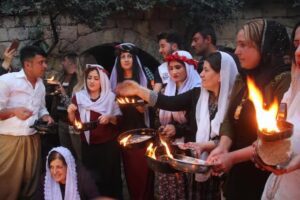
For Yazidis, Red Wednesday represents the end of one year and the beginning of another. In the days leading up to the festival, families prepare for the celebration through a series of customs passed down through generations.
One of the most visible traditions is the gathering of red spring flowers, which are placed on the doors of homes as a symbol of renewal and blessing. Families also dye eggs in bright colours and use them in games and celebrations.
Each year, Yazidis from Kurdistan and abroad travel to the holy Lalish temple in Shekhan, where the central ceremonies are held in a peaceful and spiritual atmosphere. Youth gather flowers from the surrounding mountains, placing some at the temple’s small doorways and wearing others as ornaments.
Another important ritual is the lighting of 366 candles, representing the days of the year. The candles are lit with prayers for peace, goodness, and prosperity for all humanity.
Egg dyeing holds particular meaning within the festival. In Yazidi belief, the egg symbolises the earth’s shape, birth, and the origin of life. Families often place coloured eggshells mixed with flowers and dough at the entrances of their homes as a prayer for blessing and harmony.
Nature also holds a central place in Yazidi tradition. Alongside Red Wednesday, the community observes several seasonal festivals, including the Summer Forty Days, Winter Forty Days, the Feast of Jamaya, and the Feast of Khidr Elias.
The Yazidi population numbers around half a million people and is ethnically Kurdish. Many Yazidis live in areas known as Ezidkhan, centred around Sinjar near the border with Syria.
Despite the historical and cultural importance of these areas, Sinjar remains among the disputed territories between the Kurdistan Region and Baghdad, with its final status still unresolved.