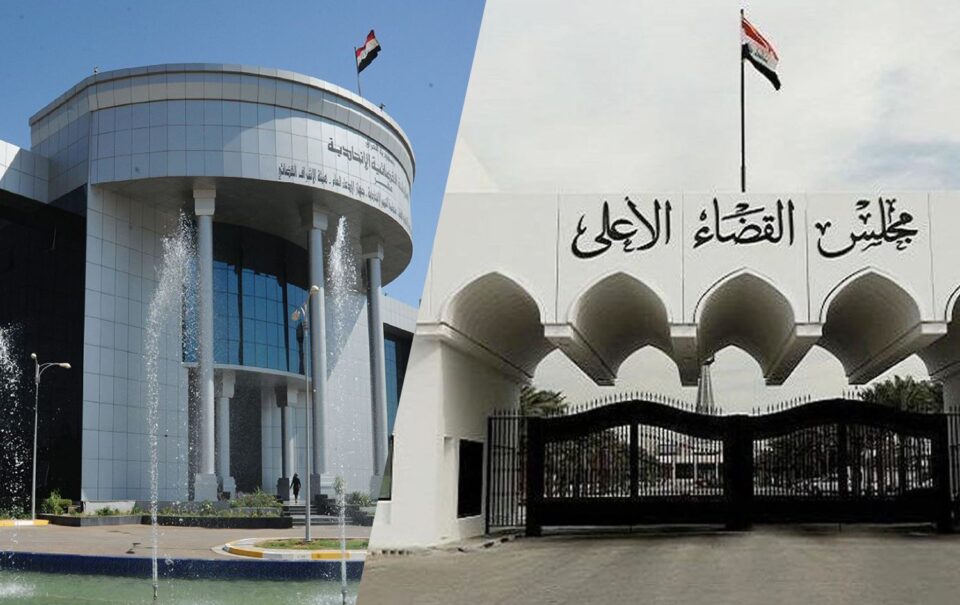
Shirwan Haidari, former Minister of Justice for the Kurdistan Region, has condemned the recent mass resignation of members from Iraq’s Federal Court, describing the events as fundamentally unconstitutional and harmful to the country’s judicial credibility.
Last week, six permanent and three reserve members of the Federal Court resigned amid growing pressures. Shortly after, the court president was retired and replaced, prompting the resigned members to return to their positions. Speaking to Kurdistan Globe, Haidari said this turmoil “negatively affected Iraq and undermined public confidence in institutions like the parliament, government, and presidency.”
Haidari pointed to external pressures, particularly from militia groups, as a key reason behind the resignations. “The court president’s resignation is especially troubling because the court is supposed to resist such pressures,” he said. He also stressed that the court has lost its legitimacy and must operate with a national and institutional mandate moving forward.
He explained that the resigning members took a principled stance related to the controversial Khor Abdullah waterway dispute and disagreements over the Coordination Framework and military command. “The court was never established on a solid constitutional foundation, which explains its current crisis,” Haidari added.
Bakhtiar Haidar, head of the Kurdistan Democratic Party’s legal office, echoed these concerns, calling the 2022 changes to the Federal Court by the Iraqi Parliament “unconstitutional.” He accused the current court members of overstepping their authority by interpreting or amending the constitution to suit political interests. “This court is politically biased, closely linked to the Coordination Framework, and part of Iraq’s wider political conflicts,” Haidar said.
He also highlighted deep internal disputes within Iraq’s judiciary, particularly between the Federal Court and the Higher Judicial Council. “Their leaders are openly hostile to each other, fueling the court’s chaos and resignations,” he explained. Haidar pointed out that the court’s recent handling of the Iraq-Kuwait Khor Abdullah agreement reflects these political conflicts and the ongoing tensions between Erbil and Baghdad.
“The Federal Court must remain impartial and free from interference,” Haidar insisted. “As the Kurdistan Region, we demand a court that operates nationally and institutionally. Unfortunately, Iraq’s political environment complicates this, and the court’s current status as an unconstitutional, political body inevitably leads to such outcomes.”