
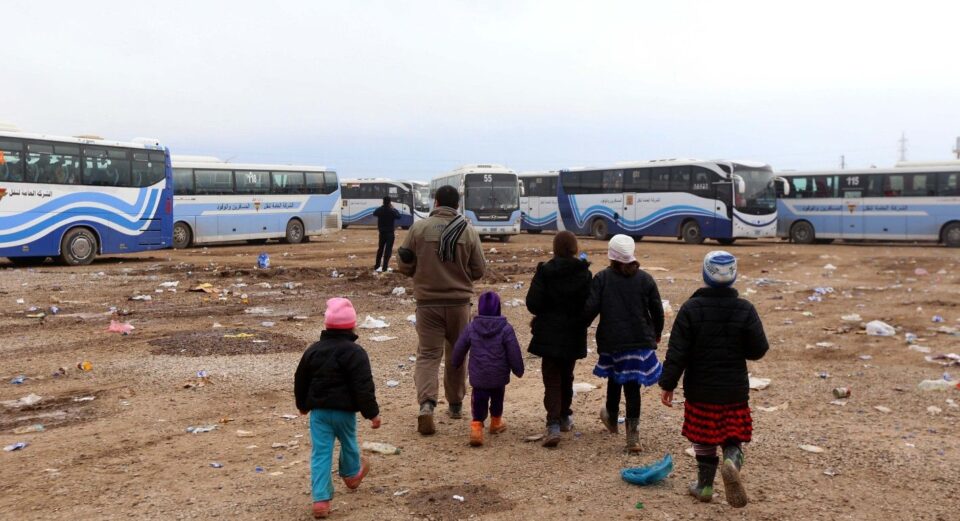
There are 1 million displaced people in Kurdistan, and the Iraqi government wants to deprive them of their rights.
On Thursday, August 21, 2025, the Iraqi Ministry of Migration and Displacement decided to no longer classify those living in displacement camps as displaced persons but rather as residents and part of the population of the places where they now live. This reclassification means Baghdad will no longer be responsible for them and will no longer be obliged to provide support.
The move is also viewed as a political step aimed at changing the demography of Kurdish areas. The Kurdistan Region has rejected the decision, calling it political and accusing Baghdad of evading its responsibility.
Sherwan Haidari, a lawyer and former Minister of Justice of the Kurdistan Region, told The Kurdish Globe: “The decision of the Iraqi Ministry of Migration and Displacement to no longer treat the displaced in Kurdistan as displaced is a strong reason to undermine the borders of Article 140, and these are the goals behind it:
First – It is a political decision. The political side of this move has been discussed before, as they want to create conflict and discrimination among the displaced in every possible way, force them into political decisions, and make them anxious by telling them that they are no longer connected to their place of residence.
Second – The goal is to change the demography of the region. They want to start the Arabization plan in the areas of displacement, tell people that those in Kurdistan are no longer linked to the borders of Article 140, especially Sinjar, and thereby weaken Kurdish claims.
Third – This decision was made by a militia group within the Iraqi government that controls the Ministry of Migration, and their goal is to undermine the Sinjar Agreement through such measures.”
Omed Khoshnaw, the governor of Erbil, told The Kurdish Globe: “We were shocked to see the decision of the Iraqi Minister of Migration and Displacement, particularly while there is a joint committee between Erbil and Baghdad for talks and coordination between the provinces as part of a political agreement. How can the minister, in writing, want to consider the displaced in the Kurdistan Region as residents of Kurdistan and not displaced? Due to the ISIS war, more than a million people have been displaced to Kurdistan, especially Christians, Yazidis, and Turkmen.”
The Kurdistan Regional Government, with the help of international agencies, has managed to settle them in camps. Today there are 18 camps, and 600,000 people still cannot return due to the poor situation in their home areas. Unfortunately, the Iraqi Ministry of Migration and Displacement does not ask whether conditions are good enough for these people to return safely.”
He added: “The Iraqi Ministry of Migration and Displacement has not been able to pressure Baghdad to provide a safe and stable life in those areas. Instead, they are applying political pressure to disrupt the demography of sensitive areas, especially the Nineveh Plain and Sinjar. Now they want to prevent displaced people from returning home. This decision by the ministry has not been studied, nor were we, as the local government, consulted. We therefore reject it and will write to the Prime Minister of Iraq to stop this decision.”
Meanwhile, in a statement, the Kurdistan Regional Government’s Ministry of Interior announced: “In an unconstitutional development and against basic rights, the High Committee for Relief, under the supervision of the Minister of Migration and Displacement, has begun efforts to change the demography of areas inhabited by Christian and Yazidi communities, whose original populations remain forced to live in camps.”
The statement continued: “Due to the ISIS war, a large number of citizens, especially Christians and Yazidis, with the support of the people and the government of the Kurdistan Region and the cooperation of international agencies and organizations, settled in camps. To this day, there are 18 camps in the Kurdistan Region, and more than 600,000 displaced persons have not been able to return to their homelands. They are waiting for conditions to improve so that they can return safely and with dignity. Instead of supporting voluntary return and paving the way for stability, the Minister of Migration and Displacement and the High Committee for Relief are meeting to deprive the displaced of their right to return and, without study or consultation, forcing them to remain as residents outside their original homes.”
The ministry concluded by urging Baghdad to annul the decision, stressing that there are currently 1 million displaced people in the Kurdistan Region, of whom 600,000 still live in camps.
The Kurdish Globe