
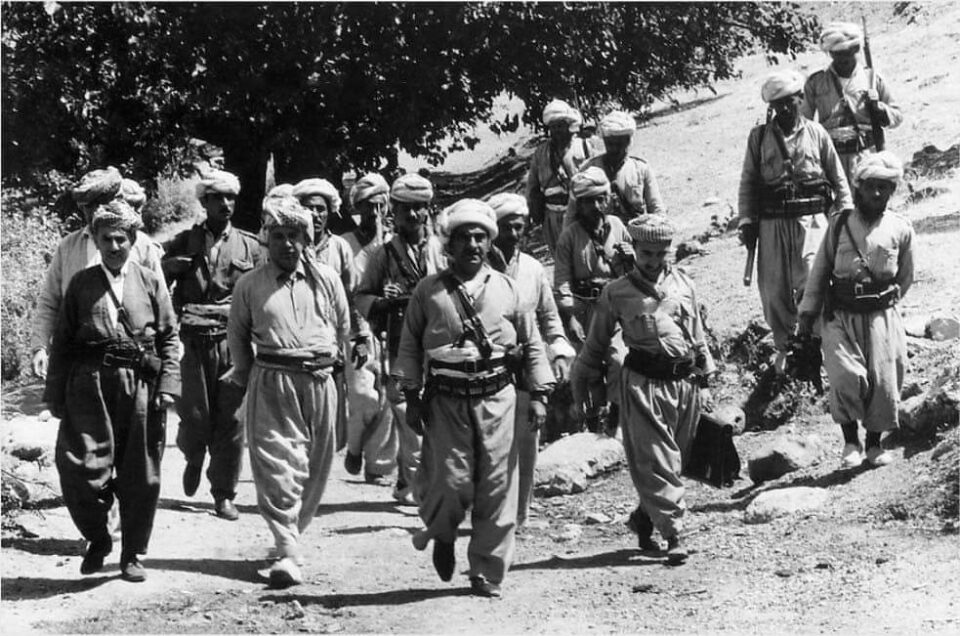
Sixty-four years on, Kurds credit the September Revolution—and late Barzani’s unifying leadership—for the March 11 Accord recognizing Kurdish rights
Sixty-four years have passed since the great September Revolution, and every year in the Kurdistan Region the memory of that revolution is commemorated with honor. The people of the Kurdistan Region connect today’s achievements to that revolution and believe it achieved its aims, and that for the first time, under its shadow, the legitimate rights of the Kurds in Iraq were recognized.
The revolution broke out on September 11, 1961
After Abdul Karim Qasim carried out a military coup in Iraq in 1958 and changed the system from monarchy to republic, at the beginning he promised to grant rights to the people of Kurdistan and asked the late Barzani to return from the Soviet Union. But after three years, Abdul Karim Qasim and his regime regretted granting those rights to the people of Kurdistan. Because of the regime’s backtracking on its promises, on September 11, 1961, the late Barzani announced the start of a revolution against the Iraqi regime. For the first time, the revolution united all Kurds in Iraq, and even other Iraqi religious and national components saw themselves in it and took part.
The September Revolution created self-reliance and willpower in the hearts of every Kurdistani citizen and conveyed the rightful demands of the people of Kurdistan to the world. The revolution was a major turning point in the history of our national liberation movement and a new historical beginning to reject the oppression and subjugation that successive Iraqi governments imposed on the Kurds.
Achievements of September Revolution
The September Revolution was the first nationwide uprising that was able to achieve its aims. The most important achievement of the revolution was the March 11 Accord, in which, for the first time, the Iraqi government recognized the rights of the people of the Kurdistan Region. The Accord contained many good points and, to a certain extent, entrenched the political, cultural, administrative, and military rights of the Kurds. Beyond national gains for the Kurds, the September Revolution had other objectives: it demanded that Iraq’s political system become democratic and that all the peoples of Iraq participate in governing the country. From another angle, the revolution transcended local borders and reached the world; for the first time, international media shed light on the national rights of the Kurds and became acquainted with the Kurds’ peace-seeking aspirations. Today’s achievements of the Kurdistan Region are the extension of the fruits of the September Revolution, and from it the Kurds formed the belief that, like other nations of the world, they have the right to their own political decision and to obtain their national rights and identity, culminating in the establishment of a government and a parliament.
The Algiers Agreement
When speaking of the September Revolution under the leadership of the late Mustafa Barzani, it is also necessary to spotlight the international plans that caused the revolution to face setbacks after those great successes. The ominous Algiers Agreement of March 1975 left the Kurds without support. As a result of that agreement, from 1977 to 1979 more than 600 Kurdish villages were razed, and more than 200,000 Kurdish people were displaced from their areas. The Iraqi government of that time, with international and regional backing, once again violated the rights of the Kurdish people and reneged on the promises contained in the March 11 Accord.
The Kurdish Globe