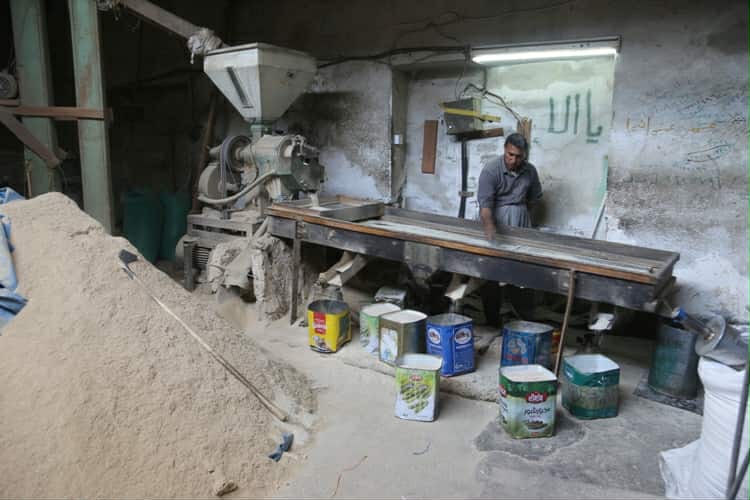
One of the oldest mills in Southern Kurdistan, Mam Khidr’s Mill in Koya, has been operating without interruption for nearly a century. For generations, it has served as both a landmark and a lifeline, grinding wheat and other grains into staple foods for the people of the region.
Located opposite Koya Castle at an altitude of 801 meters, the mill was established in 1928 with machinery imported from Lincoln, Britain. It was the first fire-powered mill in Kurdistan and Iraq, operating on black oil. Remarkably, the machines have never broken down, and to this day they continue to function with the same reliability as when they were first installed.
a family heritage
Mam Khidr, now 76, inherited the mill from his father and has dedicated his life to running it. Today, his sons and grandsons oversee its daily operations, preserving a family tradition that has become inseparable from the identity of Koya. “Our mill has been working for nearly one hundred years,” said Ali Khidr, Mam Khidr’s son. “Several times the company that built it asked to buy it back, but we refused. It belongs to our family and to Koya itself.”
The mill still processes wheat flour, sawar (bulgur), bruesh (cracked wheat), qara-kharman, rice, and other grains. Because this year’s harvest was abundant, locals have returned in greater numbers to grind their produce and prepare traditional Kurdish dishes.
A symbol of tradition
For older residents, the mill remains a place of memory as much as utility. Many recall staying several nights in the past, waiting their turn to grind their wheat before modern water-powered mills existed. “Traditional Kurdish foods are healthier and more delicious,” said one elderly resident. “That’s why we keep coming back to this mill.”
The site has also become a local attraction. Students visit on educational trips, while tourists come to see a working piece of history. Workers like Zana, who has spent years at the mill, stress its uniqueness: “This mill is older than my age. British engineers built it in 1928, and it has been serving the people ever since.”
More than a mill
Once a necessity, Mam Khidr’s mill has grown into a cultural monument that blends history, heritage, and daily life. Beyond grinding grains, it continues to preserve the memory of how generations of Kurdish families sustained themselves — and how a city’s identity can rest on the steady turn of a millstone.