
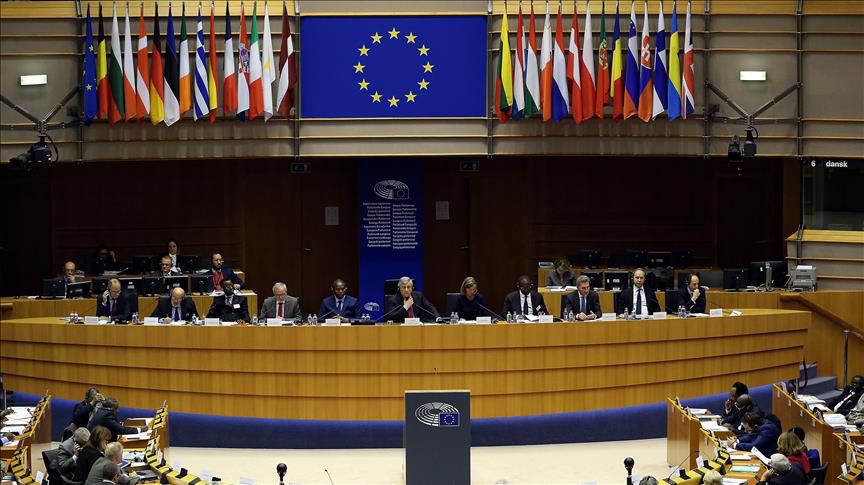
Representatives of the Kurdistan Region were warmly received at the European Parliament.
At a conference held inside the European Parliament, the Kurdistan Region’s experience of coexistence was praised. Most of the conference participants were Members of the European Parliament, and they expressed their wish to take part in next year’s National Coexistence Day in the Kurdistan Region.
A conference on coexistence in the Kurdistan Region was held in the European Parliament, chaired by the Confederation of Kurdish Diaspora and attended by many European parliamentarians.
Ano Jawhar, the KRG Minister of Transport and Communications, who attended the conference, told the media that representatives from 10 countries participated and expressed admiration for the Kurdistan Regional Government’s experience and performance.
He added that during the conference, participants commended the Kurdistan Region’s experience in the field of coexistence and valued it highly.
The Minister noted that most conference participants were Members of the European Parliament and that they showed interest in attending the Kurdistan Region’s National Coexistence Day next year.
Zeydo Baa’dri, Advisor for Yezidi affairs in the Kurdistan Parliament, told The Kurdish Globe:
“This conference was very important, and it succeeded in presenting Kurdistan’s coexistence as a beautiful image to the world. Kurdistan’s coexistence has no equivalent in the Middle East. The international community, especially within the European Parliament, is impressed by the progress and interreligious and interethnic coexistence in Kurdistan, where—unlike elsewhere—no cases of discrimination or violence have been recorded, or if any, they have been minimal.”
He added that unlike the Kurdistan Region, the situation of ethnic and religious components in central and southern Iraq is very different and alarming. Since 2003, violations against these communities have increased, including the dramatic decline in the Christian population, which has dropped to fewer than 500,000 people, according to unofficial figures. The causes include violence, persecution, murder, threats, and insecurity, forcing many to flee or seek refuge in the Kurdistan Region. Their properties and homes in many Christian-majority areas have been seized, along with those of other minorities.
He continued that after the ISIS attacks, Yezidi, Shabak, and Kaka’i communities in their home areas were also subjected to threats and discrimination from militias and armed groups, making their return difficult and unsafe.
These ongoing efforts toward peace, coexistence, and forgiveness have been reflected in the government’s agenda, programs, and principles, portraying the Kurdistan Region as a defender of equality, coexistence, and freedoms. President Barzani is seen as playing a central role in advancing this vision. While Iraq in general faces crises of coexistence and violations of minority rights, the Kurdistan Region has emerged as a more successful model of protection. The Region’s future depends on sustaining these efforts and deepening the foundations of equality and freedom for all communities—potentially making it a successful model for both the region and Iraq as a whole.
The Kurdish Globe