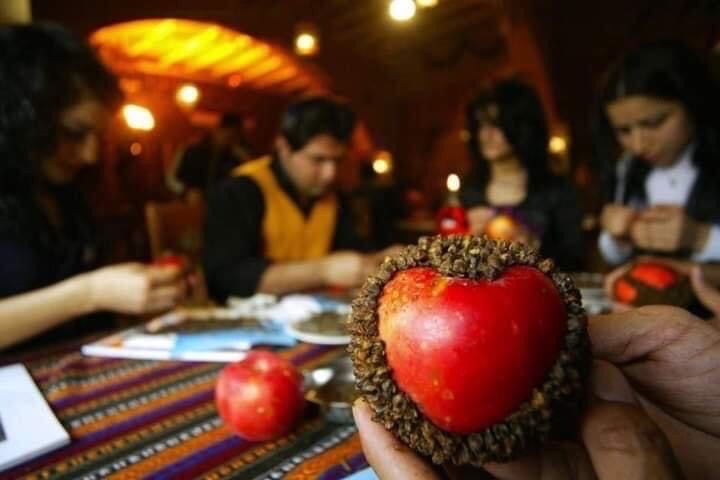
Each year, with the arrival of winter and colder days, people across Kurdistan commemorate Yalda Night, a culturally significant occasion marking the longest night of the year. The observance is rooted in the recognition of a cosmic balance, when darkness reaches its peak before gradually giving way to longer days.
Yalda Night is also known as Chilla Night (the Night of Forty), from which the term Shawchilla originates. Celebrated on December 22, the first day of winter, the night signals the beginning of the Great Chilla, a forty-day period lasting until February 10. This is followed by the Small Chilla, which continues until the end of February and is traditionally considered colder and harsher. As winter nears its end, people look ahead to Rashamê (March), anticipating warmer days and the approach of Nowruz and the Kurdish spring.
The night is marked by a variety of cultural activities. Literary centres, organisations, and cultural groups host poetry readings and gatherings, while families come together in their homes to share food and conversation, welcoming the longest night of the year in warmth and unity.
In parts of Eastern Kurdistan, traditional foods are closely associated with Yalda Night. One custom involves soaking wheat in vinegar and preserving it for the occasion, a practice believed to strengthen the body against winter’s cold. Stuffed cabbage (dolma) is also commonly prepared. In earlier times, families gathered around a kursi—a wooden table placed near a tandoor oven—to stay warm while spending the night together.
Historians note that Yalda Night holds particular importance in Zoroastrian tradition, where it symbolises birth and renewal, marking the victory of light over darkness as days begin to lengthen.
Among the customs passed down through generations is the clove-studded apple, an ancient Kurdish symbol of love and affection. Lovers and spouses would exchange apples covered in dried cloves, valued for their fragrance and longevity, representing enduring and eternal love in Kurdish culture.
Yalda Night has been recognised by UNESCO as an element of cultural heritage. Kurds, as one of the region’s ancient peoples, continue to celebrate the occasion with deep-rooted traditions that reflect resilience, warmth, and a strong connection to cultural identity.