
Historian Tariq Karezi speaks on Kirkuk’s past and cultural heritage.
In a city where history is often debated through politics rather than facts, Kurdish writer and historian Tariq Karezi says the story of Kirkuk can still be read clearly—if one looks closely enough at maps, culture, and lived memory.
In an interview with The Kurdish Globe, Karezi traced the roots of Kirkuk’s identity, arguing that demographic changes in the city are a recent phenomenon shaped by deliberate state policies rather than organic history.
“During the British arrival and the withdrawal of the Ottoman army, there were no Arab-majority cities anywhere in the Mosul Vilayet,” Karezi said. The Vilayet, which covered present-day Duhok, Nineveh, Erbil, Kirkuk, Sulaymaniyah, Halabja, and parts of Saladin, was overwhelmingly non-Arab. “Kurds and other non-Arab groups made up more than 80 percent of the population, with Kurds alone exceeding 68 percent,” he explained.
According to Karezi, Arabs began arriving in larger numbers only toward the late Ottoman period, a trend that intensified under the Iraqi monarchy and later republican governments. “These were systematic, state-backed plans aimed at increasing the Arab population,” he said.
Karezi pointed to culture and literature as further evidence. “Before the twentieth century, there is not a single Arab poet or writer documented in Kirkuk or Southern Kurdistan,” he told The Kurdish Globe. “Kurds, despite being the majority, often wrote in Arabic, Persian, or Turkish, which shows openness—not Arab dominance.”
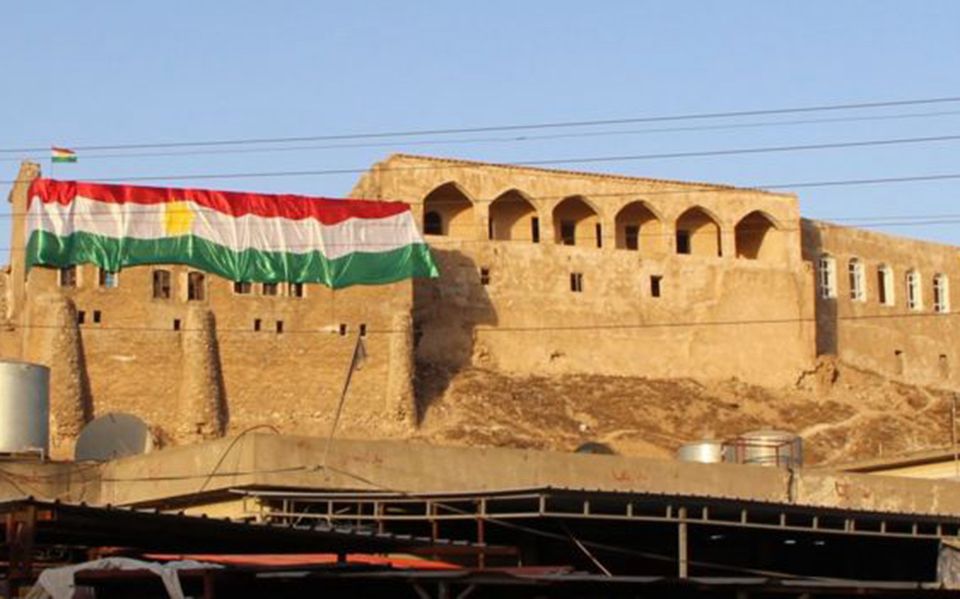
He also highlighted the destruction of the Kirkuk Citadel in 1997 as symbolic. “Saddam’s regime destroyed it because its architecture reflected a local Kurdish identity, not an Arab one,” he said.
The historian noted that geography itself tells a story. “Topographical names across Kirkuk and Garmian are Kurdish and indigenous,” Karezi explained. “Ottoman and later Iraqi authorities systematically altered these names.” He cited examples such as the renaming of Rahimawa to Al-Andalus, Prde to Al-Nahrain, and Sargaran to Al-Quds. “Renaming places is a way of rewriting history,” he added.
Karezi’s account becomes more personal when discussing Arabization policies. His own family was among thousands exiled after the 1963 Ba’ath coup. “When we returned to Kirkuk in 1973, the city did not have a single alley with an Arab majority,” he recalled. Weddings, Newroz celebrations, and traditional music filled the streets. “The city was alive with Kurdish culture.”
He also stressed the importance of folklore. “Kirkuk is the cradle of Kurdish Maqam,” Karezi said. “This tradition did not emerge in isolation—it grew from the soil of this region and remains alive today.”
Even decades after Arabization campaigns, Karezi argues that the city’s deeper identity has not disappeared. “Films and photographs from the British era show clearly that the people of Kirkuk were Kurds,” he said. “Clothing, customs, cemeteries—none point to Arab roots here.”
“For all the budgets spent and policies enforced,” Karezi concluded, “Kirkuk’s culture, art, and memory remain non-Arab. History can be pressured, but it cannot be erased.”
Interview by:
Frsat Said Shkur