
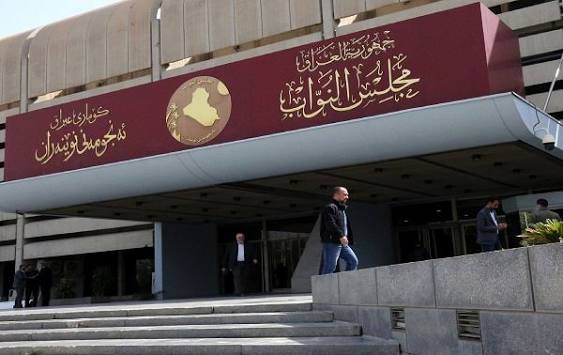
Iraqi parliament prepares to convene amid Kurdish calls for a unified negotiating stance.
The Federal Supreme Court of Iraq has officially ratified the final results of the Iraqi parliamentary elections, clearing the way for the first session of the new parliament and marking the formal start of negotiations to form the next federal government.
Following the court’s decision, constitutional procedures for convening parliament were immediately set in motion. The first session will be chaired by the eldest member of parliament, in line with Iraqi law.
Nearly six weeks after Iraqis went to the polls, the election results have now gained full legal legitimacy. With this step completed, political forces across the country have begun repositioning themselves, and early scenarios for government formation are taking shape.
In its ruling, the Federal Supreme Court confirmed that the electoral process for the sixth parliamentary term complied with constitutional and legal requirements. The court stated that it had no objections to the process, paving the way for the next political phase.
Although winning blocs began negotiations soon after preliminary results were announced—forming alliances and proposing candidates for the post of prime minister—political sources indicate that shifting demands and competing interests may lead to changes in alliances and the emergence of alternative candidates.
Amid these developments, Kurdish political parties are seeking to present a unified front in Baghdad. According to political sources, the Kurdistan Democratic Party (KDP) and the Patriotic Union of Kurdistan (PUK) have made notable progress toward reconciliation and consensus, aiming to enter the new parliament and federal government with a single, coordinated Kurdish “package.”
In this context, the KDP Central Committee held a meeting chaired by President Masoud Barzani, during which the formation of the new Iraqi government was a central topic. In a statement following the meeting, the KDP stressed that the people of Kurdistan deserve to be represented in Baghdad by a unified Kurdish position rather than fragmented party delegations.
“The Kurds must negotiate as one nation, not as competing political parties,” the statement said, emphasizing that Kurdistanis should be genuine partners in Iraq’s governance alongside their Shia and Sunni partners, while safeguarding the rights of all other components of Iraqi society.
The statement also recalled that the modern Iraqi state was founded on three core principles: partnership, balance, and consensus. These values, it said, form the spirit of Iraq’s permanent federal constitution and must be strengthened to ensure political stability and effective governance.
Additionally, the KDP called for a lasting and constitutional solution to the Kurdistan Region’s budget and salary issues, along with the resolution of other long-standing disputes between Erbil and Baghdad. A high-level KDP delegation has been tasked with pursuing these objectives during negotiations.
International media outlets are closely monitoring the process, viewing the formation of the new Iraqi government as a decisive moment. Observers note that a unified Kurdish position could play a key role in shaping the next phase of federal Iraq and restoring balance within the country’s political system.