
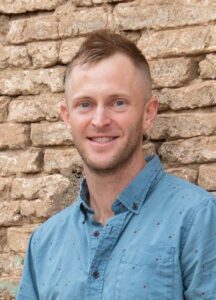
By Jamie Watt
As an American living in the Kurdistan Region of Iraq, I have seen what long-term partnership with the United States can make possible—and what happens when that partnership is treated as temporary or expendable. That is why Washington’s current posture toward Syrian Kurds in northern and eastern Syria is not just worrying; it is painful to watch. The United States benefited enormously from Kurdish sacrifice in Syria, yet now seems increasingly willing to let its closest local partners face growing pressure on their own. That pattern is hard to ignore—and harder to accept.
For more than a decade, one part of Syria has quietly resisted collapse. In northern and eastern Syria, known as Rojava, local communities managed to build something rare in a country torn apart by war: a measure of stability, security, and coexistence. This did not happen by accident. It happened through deep local sacrifice and a real partnership with the United States. Walking away from that partnership now would be both wrong and short-sighted.
The Kurdish-led administration in Rojava, alongside the Syrian Democratic Forces, has been among the most reliable partners the United States has had in the fight against ISIS. When ISIS threatened the region and the wider world, these forces did not hesitate. They fought, held territory, and paid a heavy price to dismantle ISIS’s control. As a result, American lives were spared.
Partnerships formed in war should not dissolve when the political costs rise. Loyalty, if it means anything at all, must mean something in moments like this.
But Rojava matters for more than its role on the battlefield. It’s remarkable what Syria’s Kurds chose to build while war was still raging. In a region where women’s rights are often neglected, they were made central from the start. Kurdish women became commanders, officials, judges, and decision-makers. They defended their communities, administered their towns, and reasonably insist that what they’ve earned over the last decade should not be surrendered after Syria’s civil war concludes.
For those of us living in Iraq, this story feels familiar. The experience of the Kurdistan Regional Government shows what sustained partnership can actually achieve. Over the past twenty years, the Kurdistan Region has been the most stable part of Iraq and, in many ways, one of the most stable places in the wider region.
While much of Iraq cycled through violence, mismanagement, and corruption, the Kurdistan Region welcomed waves of displaced families from across Iraq and Syria. It became a refuge during some of the region’s darkest years. It attracted investment, built institutions, and created space for growth.
This required patience, political effort, and a long-term commitment from international partners—especially the United States. The result has benefited not only Kurds but Iraq as a whole, the region, and American interests as well.
If Washington wants real stability rather than endless crisis management, it should heed this lesson. Rojava represents one of the clearest examples of what local partnership can produce: security, resistance to extremism, functioning governance, and hard-won rights, especially for women, that were defended at real cost.
No one denies that Syria is complicated. U.S. officials face legal limits, regional pressure, and the fear of deeper entanglement. These are real concerns. But they do not remove responsibility for the results of inaction.
What worries Kurdish communities today is not an official withdrawal, but something less overt: hesitation, silence, and purposeful ambiguity that shifts risk downward. When Kurdish rights—women’s rights above all—are sidelined through inaction or deference to outside pressure, the message is unmistakable. This partnership is conditional, and the erosion of Kurdish gains is treated as an acceptable price for avoiding political discomfort elsewhere.
That message does not stay confined to Syria. It shapes how future partners judge American commitments. It weakens trust. And it undermines the very model of local partnership that allowed the United States to defeat ISIS without large-scale deployments.
Syria’s future will remain uncertain. There are no easy outcomes. But uncertainty is not an excuse for drift. The United States still has influence—diplomatic, military, and moral. How it chooses to use that influence now will help determine whether Rojava’s hard-won gains endure, or whether women who fought, governed, and sacrificed will be asked to quietly step aside in the name of pragmatism.
As an American living in the Kurdistan Region of Iraq, I carry real pride in how my country has stood by the Kurds of Iraq over the long haul. At the same time, I fear the United States may now be stepping back from its closest Syrian ally simply because it has become politically inconvenient. I hope that course changes. I hope I do not have to lower my eyes and agree with my Kurdish friends who say that, in the end, they have no friends but the mountains.