The Kurdistan Region is widely regarded as one of the oldest cradles of human civilization. Archaeological evidence continues to confirm that some of the earliest societies flourished in this land, drawing sustained international academic interest and research.
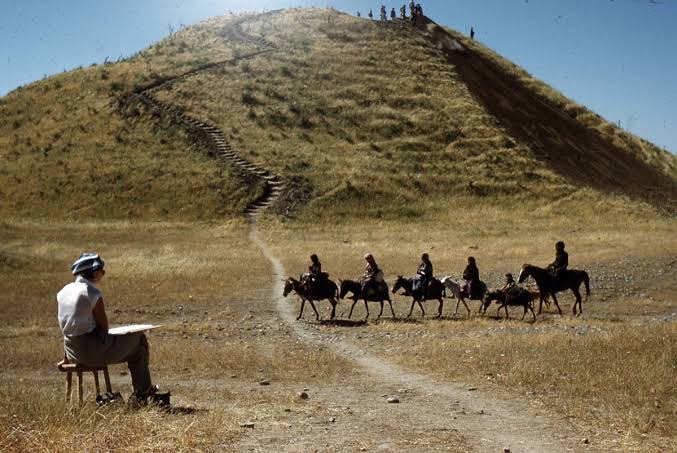
Among its most significant archaeological treasures is Tell Shimshara, located near Dukan. The site was first excavated between 1957 and 1959 by Danish and Iraqi teams, prior to the construction of the Dukan Dam. These excavations uncovered the remains of an ancient Babylonian palace and other important structures, including two archives of cuneiform tablets dating to the early eighteenth century BC.
The tablets provide rare insight into political and social life nearly 4,000 years ago. They include correspondence between a local governor and neighboring rulers, shedding light on regional alliances and rivalries. Historical evidence indicates that Shimshara served as the stronghold of a governor who acted as a vassal of the eastern Zagros kingdom of Ītabalhum. Amid the expansion of the Gutians and shifting regional power dynamics, the governor abandoned his allegiance to Ītabalhum and aligned himself with Shamshi-Adad I, ruler of a major northern Mesopotamian empire. His rule ultimately ended in internal rebellion, and the city was destroyed by fire around 1780 BC.
Shimshara’s strategic location near the Darbandi route—an important mountain passage linking the eastern Zagros corridors—underscores its historical significance. The long-term importance of this gateway is further evidenced by ancient fortresses constructed along nearby mountain slopes.
Following the initial excavations, parts of the site were damaged by the flooding of Lake Dukan. Despite this, continued archaeological work has revealed additional structures, including another palace believed to be approximately 200 years older than the one first discovered.
In recent years, the Italian Pisa Archaeological Project has resumed investigations at the site. Excavations have uncovered around ten rooms within a partially collapsed structure, some containing large storage jars. Evidence suggests that part of the complex was destroyed by a major fire in antiquity. Notably, archaeologists also discovered a cuneiform tablet dating back to the twentieth century BC.
Extensive plans for continued excavation and research aim to uncover further secrets of Tell Shimshara, reinforcing the Kurdistan Region’s central place in the history of early civilization.