
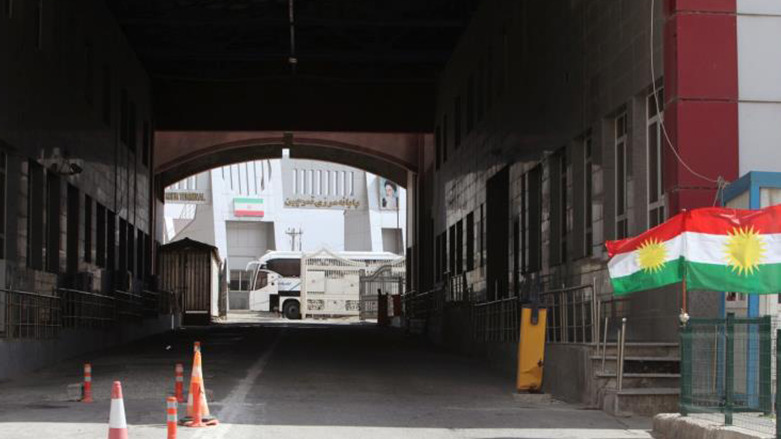
KRG says unilateral customs measures paralyze trade, fuel inflation and undermine constitutional economic partnership across Iraq.
A deepening customs dispute between Baghdad and the Kurdistan Regional Government (KRG) has stalled trade routes, frozen billions of dollars in goods and triggered warnings of sharp inflation, as Kurdish officials accuse the federal government of imposing unilateral policies detached from economic and technical realities.
At the heart of the deadlock is Baghdad’s sudden enforcement of the Automated System for Customs Data (ASYCUDA), an electronic customs platform developed by UNCTAD and used globally. Federal authorities say the system is essential to combat money laundering, regulate imports and prepare Iraq for eventual World Trade Organization accession.
Basim Al-Awadi said ASYCUDA represents an “international obligation” and is necessary to formalize Iraq’s trade sector. But Kurdish officials argue the way it has been imposed—alongside new tariffs of between 5% and 30% introduced on Jan. 1—has effectively paralyzed commerce rather than organized it.
“The decision was taken without coordination, without readiness, and without regard for regional realities,” a senior KRG official stated. “What we are seeing is not reform, but economic suffocation.”
Ports clogged, capital frozen
The immediate fallout has been severe. According to figures cited by Iraqi financial authorities, between 70,000 and 100,000 shipping containers are currently stalled at Umm Qasr port in southern Iraq, trapping an estimated $5 billion worth of goods and freezing around $4 billion in financial transactions.
Logistics expert Majroum Balisani said the delays were inflicting daily financial penalties on traders through storage fees and demurrage costs. Omid Farooq, a director at a regional trading company, said rerouting imports through federal ports has sharply raised costs.
“Moving goods through Basra now costs approximately $2,000 more per shipment compared to previous KRG routes,” he said.
For Erbil, the bottleneck highlights what it sees as a wider attempt to centralize economic control by bypassing established trade channels in the Kurdistan Region.
Border reality versus federal policy
Prime Minister Mohammed Shia al-Sudani has instructed customs authorities to unify procedures at all Iraqi entry points, including those under KRG control, arguing this ensures fair competition and protects domestic production.
The KRG does not dispute the principle but says implementation at key crossings with Iran—Parviz Khan, Bashmakh and Haji Omeran—is technically impossible under current conditions. Because of international sanctions on Iran, Kurdish officials say ASYCUDA cannot be synchronized at those borders, nor can traders access dollars at the official Central Bank rate.
“This is where policy ignores reality,” said a KRG trade official. “You cannot impose an electronic, dollar-linked system where neither infrastructure nor currency access exists.”
Traders have also complained of arbitrary customs valuation. In some cases, goods worth $50 were reportedly valued at $1,500 by customs officials, inflating a 30% tariff far beyond the actual price of the item.
A Kurdish official said the measures were designed to “weaken the KRG’s economic position” and marginalize regional authorities and the private sector.
Inflation fears grow
Economists warn the dispute is rapidly spilling into the wider economy. Bawar Jamal, head of the Economist Organization, said markets face a “massive wave of inflation,” predicting consumer prices could rise by 30% to 50% if the deadlock persists.
The impact is compounded by currency pressures. Traders operating at sanctioned borders are excluded from the official 1,320 dinar-per-dollar rate, forcing them to buy dollars on the black market and accelerating the dinar’s decline.
Nawzad Sheikh Kamil, Director General of Trade at the Kurdistan Regional Government (KRG) Ministry of Trade and Industry, said the policy “shocks the market” and risks rising poverty and unemployment as imports slow or stop altogether.
Public anger is already visible. Traders in Baghdad have staged protests and closed markets in defiance of the new tariffs.
Calls for de-escalation
With Ramadan starting, Kurdish officials warn that failure to resolve the crisis could lead to a full market shutdown. Jamal said he had submitted a proposal to Kurdish blocs in parliament to temporarily increase customs discounts to 75% to clear backlogged goods.
Baghdad has announced limited concessions, including a full waiver of storage fees and a 50% reduction in investor shares. But traders and KRG officials say these steps fall short.
Only a comprehensive Baghdad–Erbil technical agreement that recognizes the unique challenges of the Iranian border, they argue, can avert a nationwide economic shock and protect Iraq’s fragile non-oil growth.
The Kurdish Globe