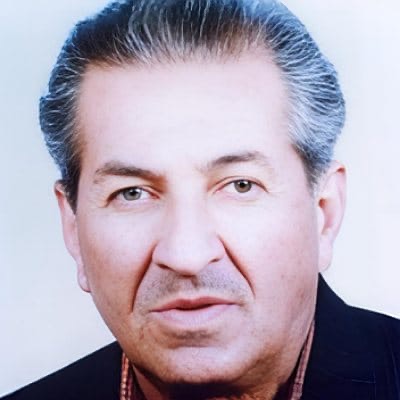
Mishko is remembered as one of the most genuine artists in Kurdish musical composition and maqam, and a talented innovator in Kurdish art. His name has become closely associated with Erbil, standing as a symbol of the city’s rich cultural heritage.
Born Shawkat, son of Saeed and grandson of Haji Ibrahim Agha, in 1908 in the Saray neighborhood of Erbil Citadel, Mishko spent his early years in hardship. In 1914, his family relocated to the village of Dere, their ancestral home, before returning to Erbil in 1918. Following the death of his father, Mishko was supported by his maternal uncle, Haji Sabir Al-Allaf.
In 1931, at a celebration marking Ali Pasha Doghramachi’s election to parliament, Mishko sang the Bayat maqam, demonstrating the mastery that would define his career. He learned singing and maqam from Master Shahaba, a renowned maqam teacher in Erbil, and studied lawk, a traditional Kurdish folk song, from Kawis Agha. Mishko first heard the lawk “Li Li Jawey” from Kawis Agha, which he later recorded.
Mishko’s personal life was marked by both joy and tragedy. He married in 1939 and had a daughter. In 1943, while he was traveling in Baghdad, his first wife fell seriously ill and passed away. Overcome with grief, Mishko returned to Erbil and performed the poem “Akhtar” at her grave, singing in maqam and weeping. This performance remains one of his most celebrated works. In 1948, he married again, and with his second wife had two sons and a daughter. His sons later honored his legacy by establishing the “Mishko Recording Studio” in Erbil.
Throughout his life, Mishko collaborated with many prominent Kurdish artists, including Kawis Agha, Aziz Agha, Muhammad Arif Jaziri, Hassan Jazrawi, Tayar Tawfiq, and Rasul Gardi. Following the March 11, 1970, agreement, he recorded numerous joint performances with fellow musicians such as Tayar Tawfiq, Haidar Baqqal, Jamila, Fayeq Bazargan, and Muhammad Jaza.
For over 60 years, Mishko dedicated himself to Kurdish maqam, qoriyat, composition, and song. His voice and artistry continued to captivate audiences until early 1989, when illness prevented him from performing. On 18 May 1989, after 81 years of life, Mishko passed away, leaving behind a rich musical legacy. Today, enthusiasts of authentic Kurdish music continue to be inspired by his melodious voice and enduring contributions to Kurdish art.