
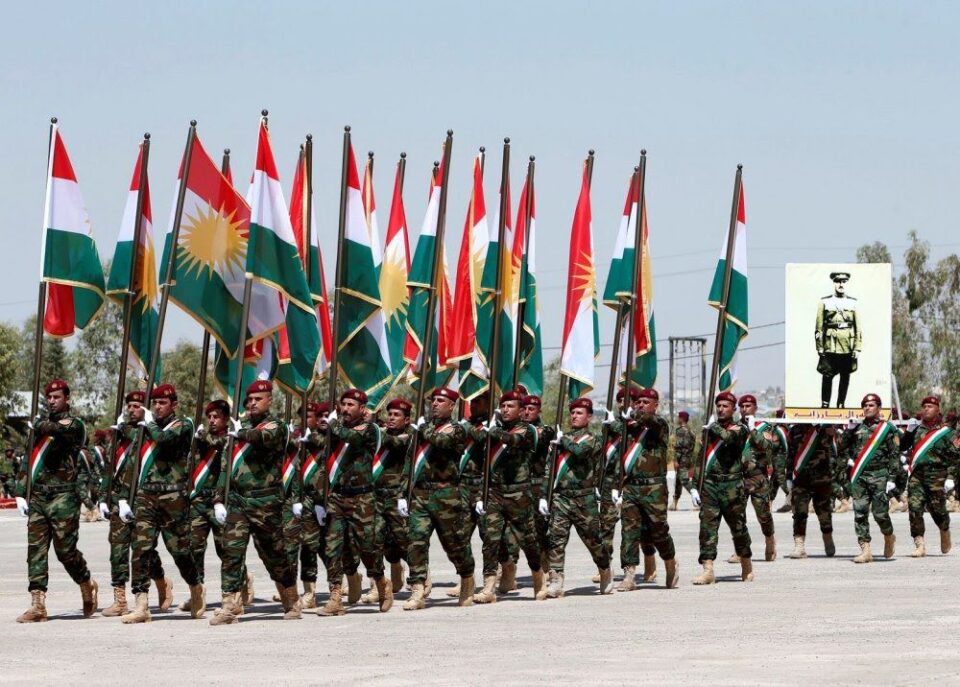
In a strategic move regarded as the most significant military transformation in the Kurdistan Region since 1992, the process of unifying the Peshmerga forces has entered a decisive phase. By announcing the establishment of the First and Second Regional Commands, the Kurdistan Regional Government (KRG) has officially declared the end of the era of partisan forces, known as Units 70 and 80, and their full integration into the Ministry of Peshmerga Affairs. This step is not only a domestic necessity but also a direct response to the primary conditions set by the United States and Global Coalition partners for the continuation of military assistance.
According to the new decrees, all Peshmerga divisions and brigades that previously operated outside the Ministry’s umbrella are now consolidated under a single unified command. The establishment of the First and Second Regional Commands marks the end of partisan dominance over military decision-making and represents a structural shift in the organization of the Peshmerga forces.
Under the new structure, all military divisions will be reorganized according to international standards and systems. Military movements, promotions, budgeting, and logistical operations will now be managed exclusively through the Ministry of Peshmerga Affairs and the General Staff. Officials say the reform is intended to transform the Peshmerga into a modern regular force while significantly reducing political interference in military affairs.
For years, the unification of the Peshmerga has been a central demand of the Global Coalition against ISIS. The signing of a memorandum of understanding between the U.S. Department of Defense and the Ministry of Peshmerga Affairs emphasized the need for establishing a unified national force.
Observers believe the current step represents a practical response to concerns raised by Washington and its allies. The United States and coalition partners have repeatedly stressed the importance of a unified Kurdish military force capable of acting as a reliable security partner in a region marked by ongoing instability.
Over the past decade, the Peshmerga has gained international recognition for its role in maintaining regional and global security. Kurdish fighters played a key role in the fight against ISIS and contributed significantly to halting the militant group’s expansion in northern Iraq. These achievements helped establish the Peshmerga as an effective and dependable partner for international forces.
Security experts believe that unifying the forces under a single command structure will significantly strengthen the Kurdistan Region’s defense capabilities. A unified military command will allow for clearer strategies in confronting terrorist threats and responding to potential external aggression. Integrating units and standardizing training programs under one structure is also expected to enhance the operational efficiency and combat readiness of the Peshmerga.
The most symbolic aspect of the reform is the official dissolution of Units 70 and 80. For decades, these units represented political and military divisions within the Kurdistan Region. Under the new reform plan, both forces have now been fully transferred to the payroll and command structure of the Ministry of Peshmerga Affairs.
Officials say this transition marks the end of the era of party-affiliated Peshmerga forces and the beginning of a unified Kurdistan Peshmerga operating under a national command structure.
Analysts view the integration of the Peshmerga under the Ministry’s authority as more than a military reform. It is widely regarded as a significant step toward strengthening state institutions in the Kurdistan Region and advancing the process of institutionalization.
At a time when the Middle East continues to experience political and security instability, the presence of a unified national defense force is seen as one of the strongest guarantees for protecting the achievements of the people of Kurdistan and preserving regional stability. Through this historic step, the Peshmerga leadership aims to demonstrate that the force is evolving into a modern military institution capable of assuming broader responsibilities both domestically and internationally.
By: Frsat Said Shkur