
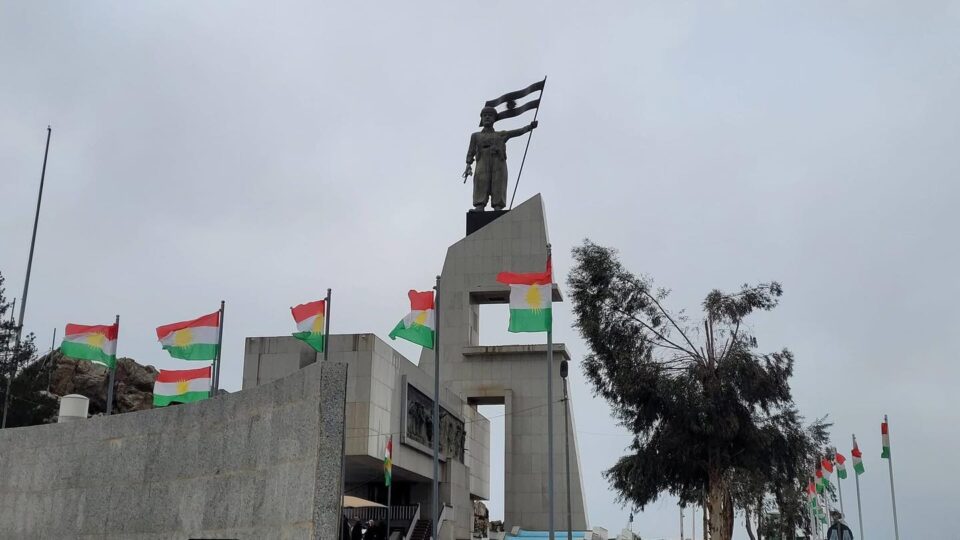
Kurdish leadership leverages the 1991 Uprising’s legacy to navigate regional volatility and secure constitutional autonomy.
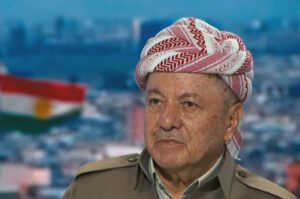
Marking the 35th anniversary of the 1991 Kurdish uprising, President Masoud Barzani said the historic revolt remains a powerful reminder of the Kurdish people’s refusal to live under oppression and their determination to build a life of dignity.
“On the thirty-fifth anniversary of the start of the Great Uprising of the people of Kurdistan, I congratulate the proud families of the martyrs, the heroic Peshmerga, the beloved people of Kurdistan,” Barzani said in a message.
The uprising, which began on March 5, 1991, after the end of the Gulf War, quickly spread across Kurdish cities and towns. Within weeks, it brought the collapse of Ba’athist control in much of northern Iraq and laid the foundation for what would later become the Kurdistan Region’s autonomous administration.
President Barzani described the uprising as the culmination of decades of struggle by Kurds against repression, including the Anfal genocide and chemical attacks carried out under Saddam Hussein’s regime.
“The Uprising was the fruit and continuation of decades of struggle and sacrifice by the masses and the revolutionary forces of Kurdistan,” he said. “This proud event carries a message for every individual in Kurdistan, now and in the future, of non-submission, the pursuit of liberty, and the will to live a life of dignity.”
For many Kurds, the events of March 1991 remain one of the defining chapters in their modern history. The revolt began in the town of Rania, where local residents and Peshmerga fighters seized Ba’athist offices and military bases. The uprising quickly spread across the region, eventually leading to the liberation of most Kurdish cities.
From a Kurdish perspective, the uprising did not emerge suddenly. It was the result of decades of resistance by Kurdish political movements and fighters in the mountains.
President Barzani himself had long warned that the balance of power in Iraq could change dramatically. By the late 1980s, Kurdish political forces believed that the Ba’athist regime’s grip on Kurdistan would eventually weaken.
During the uprising, Kurdish parties united under the umbrella of the Kurdistani Front, coordinating both political and military actions across the region.
President Barzani also used this year’s anniversary to reflect on the fragile political environment surrounding Kurdistan today. The Middle East remains tense, with multiple conflicts unfolding across the region.
“Currently, our region is passing through a very complex and sensitive situation,” he said. “We hope that all existing problems and conflicts in the region reach a resolution through peaceful means.”
He added that Kurdish leaders would work to keep the Kurdistan Region away from war and instability.
“We will do everything in our power to ensure that Kurdistan remains protected and distanced from war, adversity, and misfortune,” President Barzani said.
Other Kurdish leaders echoed similar messages, linking the legacy of the uprising to the need for unity and stability in the present.
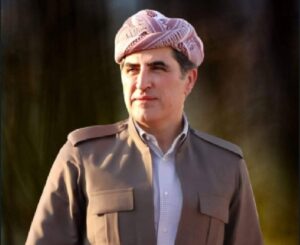
Kurdistan Region President Nechirvan Barzani described the 1991 revolt as a decisive turning point in Kurdish history.
“The Uprising was a historical turning point and a decisive response by the people of Kurdistan in rejecting oppression and tyranny,” he said. “It marked a step toward freedom and dignity.”
Kurdistan Region President Nechirvan Barzani also stressed that the Kurdistan Region should remain a stabilizing force in the wider Middle East.
“The Kurdistan Region will, as always, remain a primary factor for peace and stability,” he said. “It will not become part of any military conflict or escalation that would harm the lives and security of our citizens.”
For the Kurdish leadership, the memory of the uprising is closely tied to the institutions that emerged in its aftermath. In 1992, Kurds held their first parliamentary elections, forming the Kurdistan Regional Government and establishing the political structures that still govern the region today.
Prime Minister Masrour Barzani said those institutions must now be protected and strengthened.
“The Uprising is one of the most glorious achievements of the people of Kurdistan,” he said. “Through the struggle and sacrifices of the people, the Kurdistan Region today has official and legitimate institutions that we must protect and develop by all means.”
PM Masrour Barzani also emphasized that unity among Kurds remains the most
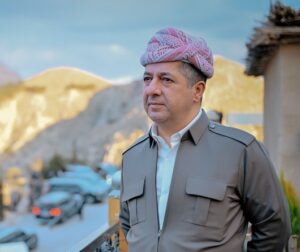
important factor in safeguarding those achievements.
“Unity is our greatest and strongest asset,” he said. “Just as the March 1991 Uprising succeeded and produced today’s achievements through unity, the people of Kurdistan must now protect and defend their national achievements more than ever.”
Across Kurdistan, the anniversary is traditionally marked by ceremonies honoring the thousands of people who lost their lives in the struggle against the Ba’ath regime. Families of martyrs, Peshmerga veterans and political leaders often gather to reflect on the sacrifices that made the region’s autonomy possible.
For many Kurds, the uprising was not simply a military revolt but a moment when an entire society rose together.
In his message, President Masoud Barzani returned to that idea, describing the uprising as a legacy that belongs to every generation.
The lesson of March 1991, he suggested, is not only about the past but about the future.
The spirit that drove ordinary people into the streets and the mountains three and a half decades ago, he said, must continue to guide Kurdistan’s path.
“On this sacred anniversary,” Barzani said, “we send our greetings to the martyrs of the Uprising and all those who fell on the path to the freedom of the Kurds and Kurdistan.”
The Kurdish Globe