
By Younes Mohammad
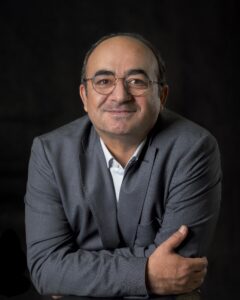
The late afternoon light drifted through the curtains, soft and deliberate, and he sat across from me, a man who had not seen the world for years, yet whose words carried their own quiet radiance. We spoke for hours, or rather, he spoke, and I listened.
He told me of the day he chose to become a Peshmerga, a decision years in the making, yet life-altering in a single instant. He spoke of leaving home, of a house that no longer felt like home. His wife stood by the doorway, hand resting lightly on the frame, silent. His children understood nothing of war, but they felt the weight of a kiss that lingered longer than usual.
Then he spoke of war, of ISIS, of gunpowder and the explosion that shattered his world. “At first I thought it was just dust,” he said, “then a few seconds later, I realized I couldn’t see.” His voice was calm, stripped of drama, which made it heavier than any cry. “I gave part of my life to defend Kurdistan, and if called upon again, I would do it. This land was never preserved by words alone.”
There was no complaint, no demand for recognition—only the quiet truth of a life shaped by choice. Silence settled, thick and searching. Then he asked, gently, “What have you done for this land? For the families left behind by the war? Have you ever visited them?” Not as an accusation, but as a ledger we all must eventually face. I had no answer. Shame rose slowly, almost physically. He noticed and offered a faint smile. “I wanted to see if answering is harder than asking,” he said, then added softly, “The fact that you came, that you are telling my story, taking photographs, becoming our voice, is already something valuable. Many do nothing at all.”
Minutes later, his phone rang. His son’s voice lit up his face—not with sight, but with recognition. After the call, he turned to me. “Do you have time, would you like to go somewhere?” I said I had come alone. “Then let’s see my only friend,” he said.
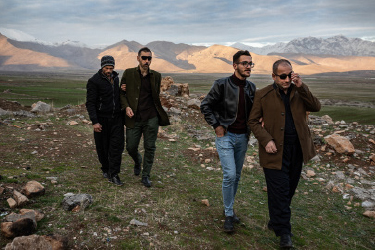
We left the city. Asphalt gave way to dirt, dirt to stone, stone to the mountain foothills. We stopped on a small rise. A car appeared, and a man wearing dark glasses emerged, guided by a companion. In that moment, I understood: he too could not see. Two blind men walked toward each other in the mountains. When they met, their arms opened with certainty. They embraced as if they had always known this moment, as if they were two halves of the same wound finally reunited.
With help, they sat and spoke of memories, of nights when sleep would not come, of sounds still echoing in their heads. They laughed across the rocks, then fell into silence, yet even their silence was full, heavy with meaning.
I later learned they had not known each other before the war. Their homes had been close, yet their paths had never crossed. They had not fought side by side. Each had gone, each had been wounded, each had lost sight alone. Years later, by chance, they met. Two men who will never see one another, yet who became the closest people in each other’s lives.
Whenever their hearts grow heavy, they come here. They sit in the open air. They speak. They laugh. Sometimes they weep. Then they return home lighter. They do not see one another, yet perhaps understand each other more deeply than most of us ever could. On the drive back, the mountains and roads remained the same, yet I was forever changed.
His question still echoed: “Have you done anything for the families left behind by the war?” And the image of that embrace answered without words. That day, I understood that friendship is not about sight; it is about sharing a wound, remaining beside someone in the dark, refusing to let them face it alone.
I witnessed the meeting of two friends, a moment that leaves one indebted to humanity for a lifetime.