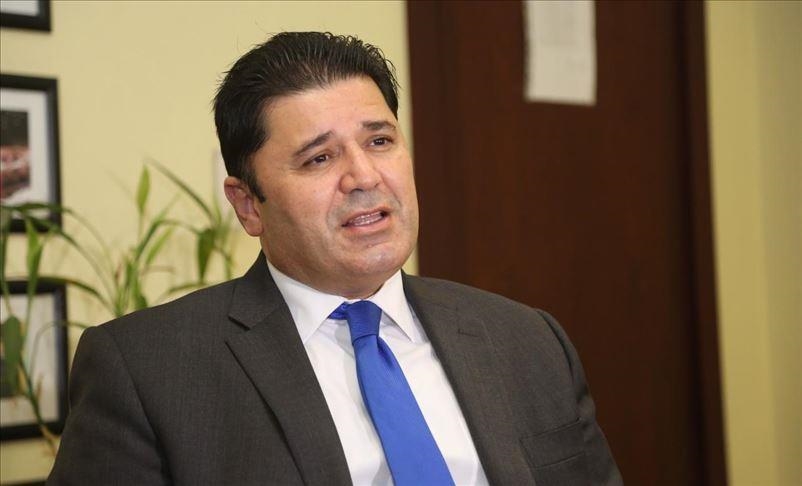
Dindar Zebari, the Kurdistan Regional Government Coordinator for International Advocacy, has warned that ongoing instability in the region is weakening border control systems and creating opportunities for organized crime networks to expand drug trafficking activities.
He noted that political and military tensions across the Middle East are having a serious negative impact on regional security, particularly in efforts to combat narcotics and psychotropic substances.
According to Zebari, recent developments, including the February 28, 2026 conflict, have forced many neighboring countries to shift their security focus toward military operations. This shift has led to gaps in border security, which are being exploited by smuggling networks to establish new routes, especially in transit regions.
“Drug trafficking is not only a public health issue; it has become a major financial source for outlawed armed groups,” Zebari said, warning that this strengthens their ability to operate during periods of unrest.
He stressed that the issue goes beyond security, linking it to international law and human rights concerns. Zebari called on the United Nations Office on Drugs and Crime to enhance cooperation with Iraq and the Kurdistan Region, particularly in border monitoring and intelligence sharing.
He added that the Kurdistan Regional Government will continue to develop strategies to combat drug trafficking in order to safeguard national security and social stability.