
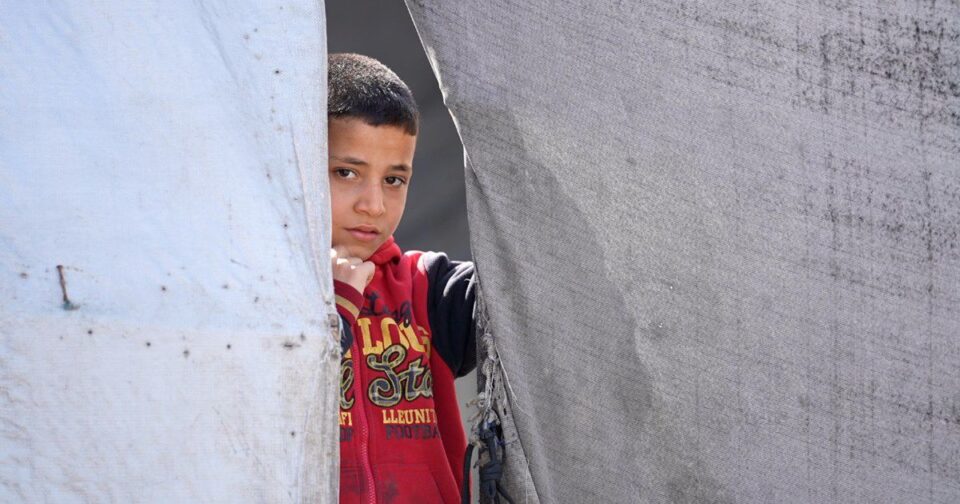
The Kurdistan Region has earned a reputation as one of the Middle East’s most remarkable stories of resilience. Since gaining semi-autonomous status in 1992, it has built functioning institutions, maintained relative security, and developed a cosmopolitan capital in Erbil that draws investors and tourists alike. That stability has come with a profound responsibility: the Kurdistan Region has become the primary refuge for hundreds of thousands of people displaced by war, persecution, and the collapse of neighboring Syria. It is a burden the region has largely embraced — but one that is now testing its limits.
A Region Overwhelmed: The Scale of Displacement
The raw numbers are staggering. Iraq hosts over 347,000 refugees and asylum-seekers, 88% of whom are Syrians, and approximately 81% of this population resides in the Kurdistan Region of Iraq. The Kurdistan Region is not merely one destination among many — it is the overwhelmingly dominant one. While about 73% of refugees live in urban areas, 27% remain in nine refugee camps within the Kurdistan Region.
The IDP situation is equally severe. Over one million Iraqis are internally displaced nationwide, with approximately 109,000 IDPs living in 21 camps in the Kurdistan Region. These camps are spread across the governorates of Duhok, Erbil, and Sulaymaniyah — all three of the Kurdistan Region’s administrative heartlands. All nine refugee camps and all 20 IDP camps in Iraq are located within the Kurdistan Region.
What makes this crisis particularly intractable is its duration. The average length of stay for refugees in Iraq is eight years — a figure that speaks not to a temporary emergency but to a protracted, multigenerational ordeal with no clear resolution in sight.
Who Are the Displaced? An Ethnic and Religious Mosaic
The displaced population of the Kurdistan Region is a cross-section of the wider region’s tragic recent history. Syrian refugees make up the vast majority, comprising roughly 90% of the registered refugee population. Beyond Syrians, the refugee population also includes people from Iran, Turkey, Palestine, and other countries.
Among Iraq’s internally displaced, the most visible and vulnerable group is the Yazidis — a Kurdish-speaking ethno-religious minority whose ancient faith, rooted in pre-Islamic traditions, has made them a repeated target for persecution. When ISIS seized the Yazidi heartland of Sinjar in August 2014, approximately 400,000 Yazidis fled to the Kurdistan Region, while tens of thousands took refuge on Mount Sinjar facing near starvation. More than 6,000 women and children were taken captive by ISIS, and nearly 2,800 remain missing to this day.
Christians — including Assyrian and Chaldean communities — were similarly expelled from the Nineveh Plains during the ISIS onslaught and found refuge in the Kurdistan Region. Sunni Arab families displaced from areas of conflict in Anbar, Saladin, and Nineveh governorates also number in the tens of thousands. The displacement map, in short, reflects the full mosaic of Iraq’s minorities, all converging on the same narrow strip of semi-autonomous territory.
Aid Under Pressure: Shrinking Funds and Uncertain Futures
For years, the Kurdistan Regional Government (KRG) worked alongside international agencies — most prominently UNHCR — to manage this burden. The results were measurable: 55,000 Syrian refugee children were enrolled in public schools in the Kurdistan Region for the 2024–2025 academic year, representing 74% of the total Syrian school-aged refugee population. Over 177,000 medical consultations were provided in UNHCR-supported primary healthcare centers. Legal assistance, civil documentation, and cash transfers provided lifelines to the most vulnerable families.
But the funding architecture underpinning this response is now crumbling. In 2025, UNHCR received only around 30% of the funds it needed, forcing the agency to prioritize programs and scale back others. The consequences have been immediate: a cash assistance program that helped refugee families pay rent and heat their homes through winter was suspended at the end of 2025 due to a lack of funds. Looking ahead, UNHCR is appealing for approximately $60 million in 2026, but resettlement quotas have collapsed — only 300 spaces were available for all refugees in Iraq in 2025, with 2026 expected to bring as few as 100 to 200 places.
The political environment compounds the humanitarian one. In January 2024, the Iraqi Council of Ministers announced the closure of all remaining IDP camps in the Kurdistan Region by the end of July of that year — a deadline that passed without full implementation but left tens of thousands of families in legal and logistical limbo.
The Kurdistan Region has shouldered an extraordinary humanitarian burden — one that far exceeds what its population and economy can sustainably absorb. Without a major reinvestment from the international community and a political commitment to genuine durable solutions, the displaced of northern Iraq face the prospect of a crisis that is quietly forgotten but never truly resolved.
By Jawad Qadir