
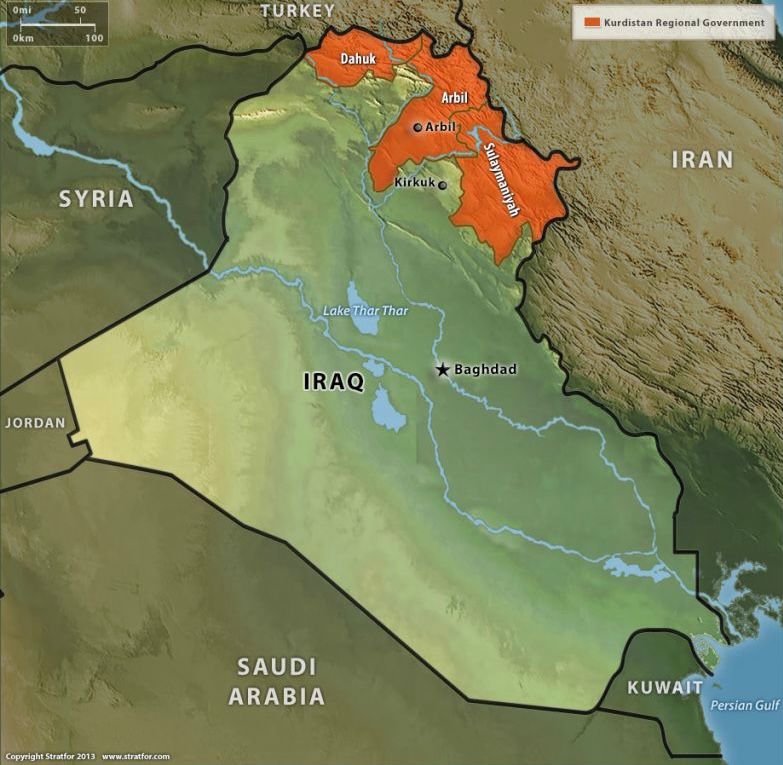
Expert calls for unity and active neutrality to safeguard the Kurdistan Region
The Kurdistan Region is facing a critical period as it seeks to preserve stability and development while navigating escalating regional tensions involving the United States, Iran, and Israel. Ongoing drone and missile attacks on the Region have raised concerns over sovereignty and civilian security.
In an interview with Kurdish Globe, Aras Abdullah, a university professor and expert in law and international relations, described the Kurdistan Region as an “unjust victim” of overlapping regional and internal conflicts.
He noted that the international community, including organizations such as the United Nations and the European Union, is aware of the situation but has largely limited its response to statements of condemnation.
“Nothing practical or concrete has been done,” he said, arguing that international responses are shaped more by political interests than by principles of justice. He added that global powers remain cautious due to the broader conflict dynamics, avoiding decisive measures such as sanctions or enforcement actions.
Abdullah also highlighted the role of the United States in providing a degree of protection to the Kurdistan Region, particularly through defense systems deployed to safeguard its interests and presence in Erbil.
On the Region’s strategy, he emphasized the importance of maintaining neutrality. “The Kurdistan Region should not become part of this war,” he said, describing the conflicts as larger than the Region’s capacity and warning of long-term consequences, particularly given its geographic proximity to Iran.
He called for what he described as “active neutrality,” combining non-involvement in the conflict with clear messaging that the Kurdistan Region seeks peace and stability.
At the same time, Abdullah warned of continued threats from armed groups within Iraq, some of which he said are exploiting the current situation to target the Region. He stressed the need for a firm political stance in Baghdad, including reassessing alliances and responses to groups involved in attacks.
Addressing internal dynamics, Abdullah pointed to a lack of unified political coordination within the Kurdistan Region. He said that stronger institutional unity, particularly within parliament and across political parties, is essential to effectively respond to external threats.
He added that while there have been moments of cooperation among political actors, greater alignment and a shared strategic vision are needed to safeguard the Region’s future.
Despite ongoing challenges, Abdullah expressed cautious optimism that improved coordination and a clear, realistic strategy could help reduce risks and reinforce the Kurdistan Region’s position in an increasingly volatile region.
By Frsat Said Shkur