
Large-scale project aims to reduce emissions, improve air quality, and boost green economic development around the capital.
As part of ongoing efforts to combat climate change and promote a healthy environment, the Erbil Green Belt Project is moving forward as one of the capital’s most strategic environmental initiatives, aiming to support a greener and more sustainable future for the city.
The large-scale project will encircle Erbil with a 78-kilometre-long and 2-kilometre-wide green zone, planned to include around 7 million productive trees, such as olive, pistachio, and orange. Alongside its environmental goals, the project is also expected to provide long-term economic benefits.
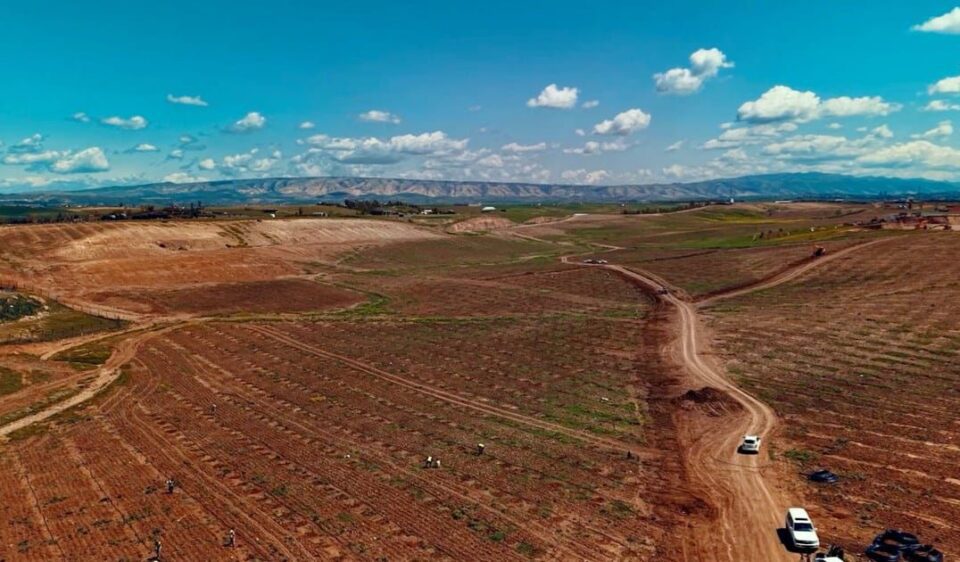
A few months ago, Kurdistan Region Prime Minister Masrour Barzani laid the foundation stone for the first phase of the project, which is now nearing completion.
Phase one covers an area of 4,200 acres, with a total cost of 6.2 million US dollars. Around 700,000 saplings have been planted, while the project currently provides daily work for 230 labourers and 30 engineers.
Following the completion of this stage, work is expected to begin on the second phase, which will cover 11,000 acres. The project is planned to be implemented in eight phases in total.
The initiative addresses several key environmental and public health priorities, including reducing urban temperatures, improving air quality, and protecting public health, while also contributing to the local economy.
From a scientific perspective, the green belt is expected to have a significant environmental impact, with the capacity to absorb an estimated 140,000 to 210,000 tonnes of carbon dioxide annually.
Once completed, the Erbil Green Belt is expected to place the city among those actively implementing large-scale environmental projects to address climate change and promote sustainable urban development.