
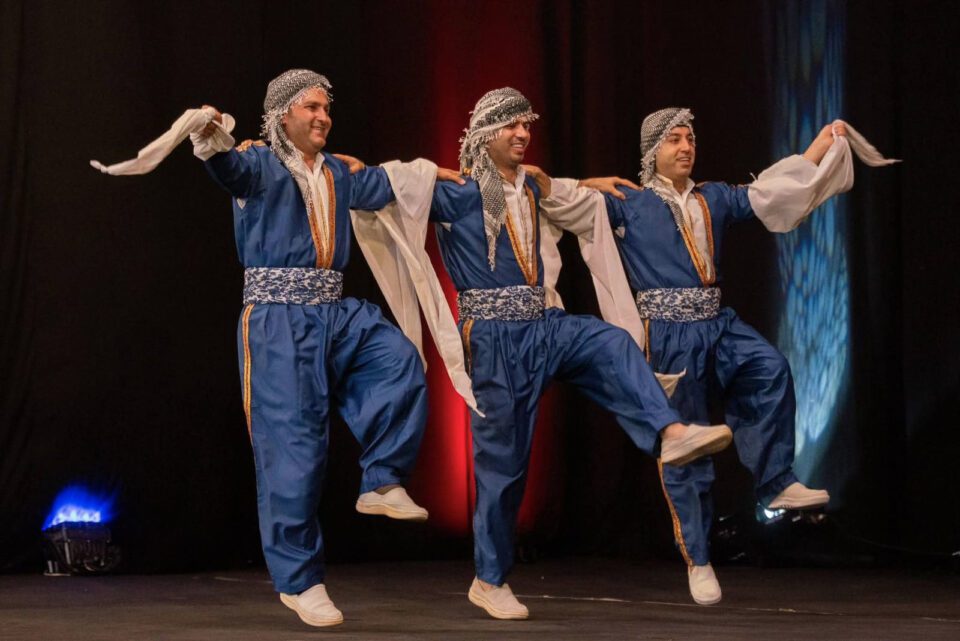
National troupes showcase Kurdish, Syriac, and Western Kurdistan heritage in special ceremony.
A cultural ceremony was held in Erbil to mark World Dance Day, observed annually on April 29 since its designation by UNESCO in 1982. The event highlighted the rich traditions of Kurdish folk dance and music, which remain a defining part of the region’s cultural identity.
The celebration took place at the Culture Hall in the capital, Erbil, and brought together artists, intellectuals, government and party officials, and culture enthusiasts. The program featured performances by the Erbil National Troupe, the Syriac National Troupe, and the Western Kurdistan National Troupe, each presenting traditional tableaux of folk dance and music.
At the end of the event, honorary awards were presented to participating troupes and veteran artists in recognition of their long-standing contributions to Kurdish national art and cultural preservation.
Himdad Lashkari, head of the Erbil National Arts Troupes, said the group participated with three main performances. He explained that the first tableau, “Bahar” (Spring), was choreographed by him with music by Badradin Babakr and costume design by Fryad Hassan. The second performance, “Govend” (Circle Dance), also featured choreography by Lashkari, with the same musical and costume collaboration, and vocals by Abbas Ashiq.
He added that the third tableau, “Ladê” (Village), was performed by Dilshad Barbayar, with music by Badradin Babakr and songs dedicated to the memory of the late Karim Gulani and Jalal Saeidi.
The ceremony also included participation from Assyrian performers, as well as the Koma Afrin troupe from Western Kurdistan, reflecting a broader cultural collaboration.
Organizers emphasized that these troupes represent more than artistic groups, describing them as living expressions of Kurdistan’s cultural and historical identity. Over the years, they have participated in numerous international festivals, earned recognition abroad, and helped train generations of artists in music, costume design, and performing arts.