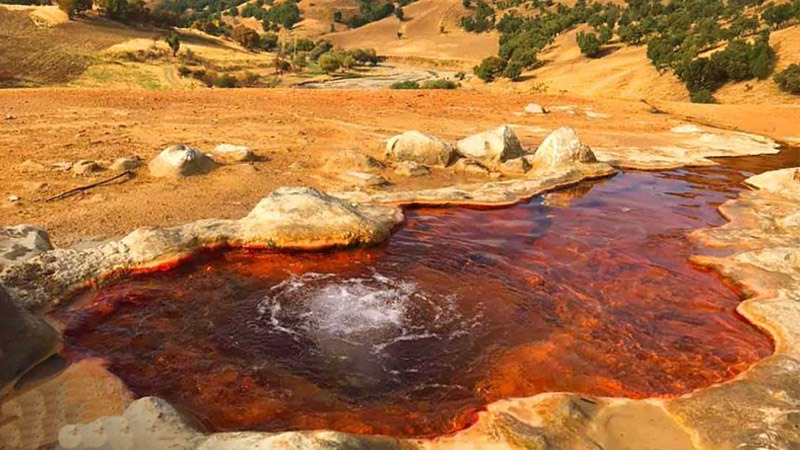
The Kurdistan Region is home to a wealth of diverse natural resources, and its springs remain among the country’s most valuable treasures. Some of these springs are known not only for their beauty, but also for the mystery and stories surrounding them. Among the most remarkable is the spring of Girrawan.
Located south of Urmia Governorate, near the border between Eastern and Southern Kurdistan and close to the city of Sardasht, Girrawan Spring has long attracted visitors from across the wider region. Sardasht is widely known for its striking landscapes, though it also contains many historical sites that have received limited attention.
Girrawan Spring is especially notable for the beliefs attached to its waters. For generations, local people have regarded the spring as sacred and believed it possesses healing qualities. It has become known as a place associated with remedies for various ailments.
The spring lies beside the small Zey River, one of the area’s most water rich rivers during the spring season. Its waters also flow into the Kalway River, a tributary of the Little Zey.
Girrawan is a mineral spring with a salty taste, making it unsuitable for regular drinking. It is situated at an elevation of 1,206 metres above sea level and draws large numbers of visitors each day from Iranian cities, Eastern Kurdistan, and the Kurdistan Region.
One of the spring’s most unusual features is the mineral content of its water, which gradually forms stone like calcium deposits. As a result, the height of the spring increases over time.
Even during winter, the water does not freeze because of its high salt concentration.
Despite its popularity, the exact geological process behind Girrawan’s formation, and the reason for its salty water, have yet to be fully studied or scientifically explained.