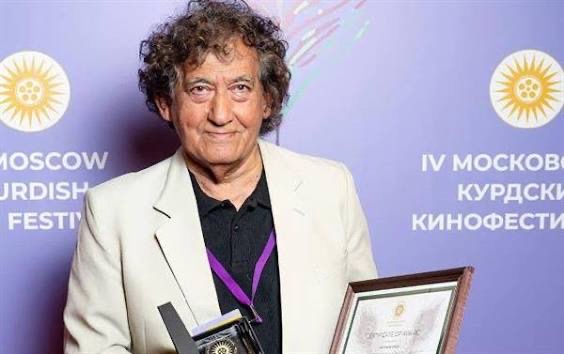
Mahdi Omed, a renowned Kurdish filmmaker and director, made a significant contribution to Kurdish culture through his artistic work. He passed away at the age of 71 after a battle with cancer, leaving behind a profound impact on Kurdish cinema and its audiences.
His death on 28 March brought deep sorrow to film lovers and the wider artistic community, as his works had reached and influenced generations. He was laid to rest at Kasnazán Cemetery in Erbil, in a funeral attended by senior officials, artists, and members of the public.
Born in 1955 in Kirkuk, Omed pursued higher education in Moscow, where he earned both a Master’s degree and a PhD in dramaturgy and cinema. He later lived in Sweden for several years before returning to Kurdistan in 2000. There, he taught at the College of Fine Arts while continuing to produce films and mentor emerging artists.
Known for his precision and dedication, Omed approached filmmaking with great care, often spending extended periods developing his projects. His goal was to raise Kurdish cinema to international standards in storytelling, cinematography, and direction. He began his career in the early 1980s, working under difficult conditions when modern filmmaking equipment was scarce.
Among his most notable works is Tunnel (1993), which addresses the Kurdish genocide and the Anfal tragedy through a historical narrative. Another major film, Horse, written and directed by Omed, explores themes of identity and coexistence in the city of Kirkuk. It tells the story of a family returning after the city’s liberation, only to find their home occupied, while also reflecting on the social and economic dynamics of the city.
Mahdi Omed’s legacy endures through his films, which continue to shape and inspire Kurdish cinema.