
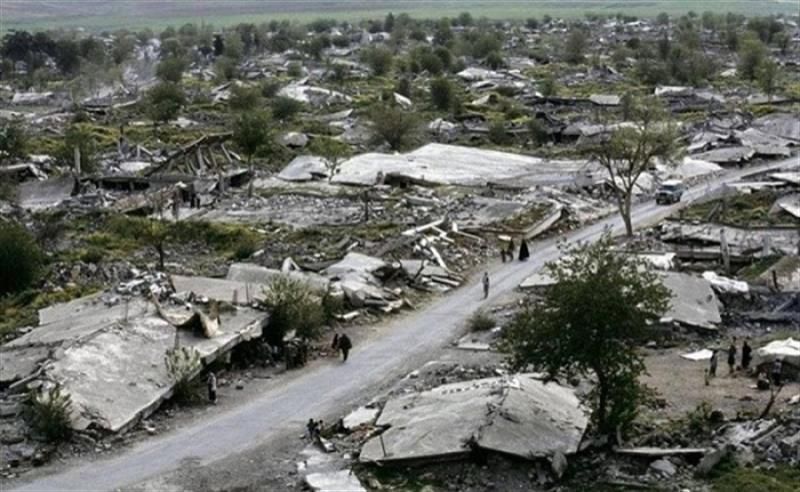
Interview with Karzan Kamal Shakhi on the lasting memory of the 1974 bombing.
Successive Iraqi regimes have repeatedly acted as a barrier to Kurdish progress, using various means to obstruct the path of struggle, revolution, and development. In this context, the morning of April 24, 1974, at 9:45 a.m., remains one of the most devastating moments in the history of Qaladiza, when warplanes bombed the city with prohibited napalm weapons.
The attack targeted both civilian areas and academic institutions, striking at the heart of education and society. The bombing resulted in the martyrdom of 123 people, including women, children, students, teachers, workers, and farmers, while more than 400 others were wounded. The event left deep physical and psychological scars on the city and its inhabitants.
The tragedy is closely linked to a broader historical moment, when faculty and students of the University of Sulaimani left their academic environment and joined the mountains in support of the Kurdish September Revolution. This shift symbolically connected education with the struggle for freedom, redefining the role of science in society. During this period, Qaladiza became a symbolic centre of this union between intellectual life and revolutionary action.
The bombing is remembered not only as a historical event but as a lasting wound in the collective memory of the city’s families. Speaking to The Kurdish Globe, Karzan Kamal Shakhi, a young resident of Qaladiza, reflected on the emotional legacy passed down through generations. He described the day as a permanent scar in the memory of the community, recalling family accounts of sudden destruction, burning skies, and the loss of young lives.
He explained that these stories are continuously transmitted within families, preserving the emotional weight of the tragedy. According to him, the event represents a moment in which innocence and knowledge were destroyed together, forming a memory that continues to shape identity and collective consciousness.
Despite the belief of the regime that such actions would weaken Kurdish national spirit, Qaladiza instead emerged as a symbol of resilience. Over time, the city recovered from destruction and later became part of the broader Kurdish uprising of 1991, reinforcing the idea that sacrifice and resistance remain deeply rooted in its history.
By: Frsat Said Shkur