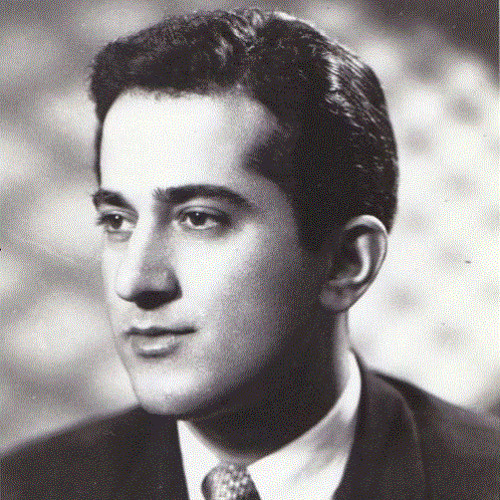
Shamal Saib, born Shamal Jalal Saib in 1931 in Sulaymaniyah, is regarded as one of the most influential figures in modern Kurdish music. His voice and artistic innovations left a lasting impact on Kurdish cultural heritage, and his songs continue to be performed and reinterpreted by new generations of artists.
From an early age, Shamal Saib showed a strong passion for music, learning to play the oud and developing his artistic style by blending Kurdish folk traditions with modern musical forms. He is widely recognized as a pioneer in modernizing Kurdish song, introducing new techniques such as backing choruses and being among the first to create songs specifically for children. He also made history as the first Kurd to record songs and music performances outside traditional studio settings.
Saib received a strong academic education, studying at King Faisal College in Baghdad before joining the Institute of Fine Arts. In 1951, he enrolled at the University of Baghdad’s College of Arts, Department of History, graduating in 1956 with a bachelor’s degree. He later worked as a teacher at Adhamiya Secondary School and became a lecturer in musical culture at the Institute of Fine Arts in 1959.
In addition to his artistic career, he contributed intellectually from a young age, publishing articles on music in magazines and newspapers such as Gelawej, Zheen, Hiwa, and Hataw at just 17 years old. His early career was also influenced by Egyptian musician Farid al-Atrash, whose style he initially imitated before developing his own distinctive voice.
In the 1960s, Saib continued his academic journey in the United States, where he earned a master’s degree in literature. After returning to Kurdistan in 1971, he was appointed assistant professor at the College of Arts in Sulaymaniyah, later continuing his academic work at Salahaddin University in Erbil after the university’s relocation.
Over the course of his career, he recorded numerous songs rooted in Kurdish folklore and poetry, helping shape the modern identity of Kurdish music. His work bridged traditional heritage with contemporary expression, making him one of the foundational figures in Kurdish musical development.
Shamal Saib passed away on July 8, 1986, in Erbil after a long illness. He was buried in Saywan Hill in Sulaymaniyah, leaving behind a legacy that continues to influence Kurdish music and culture today.