
By Jamie Watt
In 2025, Erbil alone welcomed 3.4 million visitors, according to the Kurdistan Regional Government’s Tourism Board — a figure that would have been difficult to imagine a decade ago. Even amid the periodic disruptions that regional instability brings, the trajectory is remarkable.
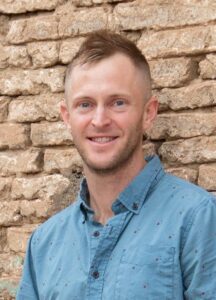
“It’s a thrill to say you’ve been to Iraq,” says Doug Taylor, who has run Keytreks, an Erbil-based tourism company, for over a decade. “People are after the experience of being here — seeing things firsthand versus what the news portrays.” That gap between expectation and reality has quietly become one of Kurdistan’s most powerful tourism assets.
Visitors often arrive expecting something harsher and less developed. What they find in Erbil is a modern skyline, a functioning and increasingly attractive city, and a population whose generosity is difficult to prepare for. Taylor has watched the shift happen hundreds of times.
“I’ve had many visitors moved to tears by the end of a trip,” he says of his visitors who are often overwhelmed by warm hospitality that is so different than their prior conceptions of the region. “How did we miss this? How was this not known?”
Long-held perceptions of danger deter some Western visitors, but the facts do not support those fears. Statistics show Kurdistan’s major cities rank safer than most major urban centers in Europe or North America on most crime measures. Even so, a personal argument is often more persuasive than data.
“I explain to potential visitors that I personally live here with my family and have done so for the last ten years,” Taylor says. “I wouldn’t keep my family here if I thought we were in danger.”
Most visitors begin with the Erbil Citadel, a UNESCO World Heritage Site considered by some archaeologists to be the oldest continuously inhabited settlement on earth, with occupation dating back to the fifth millennium BC. It sits at the center of a cosmopolitan city and sets a standard that the rest of Kurdistan’s tourist landscape holds to.
The region’s religious heritage is diverse and equally striking. The Tomb of Nahum, an important Jewish pilgrimage site inside a synagogue in the village of Al Qosh, has undergone careful restoration with United States government support. In the village of Shush, visitors follow stone paths and ancient olive groves that trace Jewish history through the landscape.
“People often know nothing about smaller historic sites like Shush,” Taylor notes, “but once they’re there, the experience becomes powerful.”
Kurdistan is also home to a rich body of largely untapped Assyrian archaeology. The Jerwan Aqueduct, built by Sennacherib around the 8th century BCE, is considered by some historians to be the world’s oldest aqueduct, predating Roman engineering by five centuries. It sits in a beautiful open landscape between Duhok and Erbil, its cuneiform inscriptions still visible in the stonework.
“You can actually touch it,” Taylor says. “That kind of raw, authentic experience is something you just cannot manufacture.” Kurdistan has it across dozens of sites and many more yet to be discovered.
Kurdistan’s lush landscape of mountains, canyons, and waterfalls also tends to shock visitors who expect Kurdistan to be a desert or barren land. Adventure tourism is likewise growing in the region’s natural terrain. For example, Safeen Mountain now draws serious climbers and trekkers through dedicated circuits developed over recent years.
Kurdistan’s position as an island of stability amid regional turbulence has become a genuine competitive advantage. While conditions elsewhere have been considerably more difficult, the region has maintained an environment that attracts both visitors and long-term investment.
“Stability, infrastructure, safety, and a strong track record help Kurdistan a lot,” Taylor says. “It offers diverse cultural, historical, and adventure experiences — all right here.” Word of mouth about what’s on offer is the most compelling way to bring new visitors to the region.
“When someone’s neighbor comes back with no issues and no bad experiences, that helps tell the story that this is a wonderful place to come and experience,” Taylor says. “If stability continues — airports open, development ongoing — I think this becomes a significant piece of Middle Eastern travel,” Taylor says.
The disruptions of regional conflict are real, and Kurdistan is not immune to them. But 3.4 million visitors to Erbil alone in a single year, achieved despite those pressures, is not a small thing. It may also turn out to be just the beginning.