
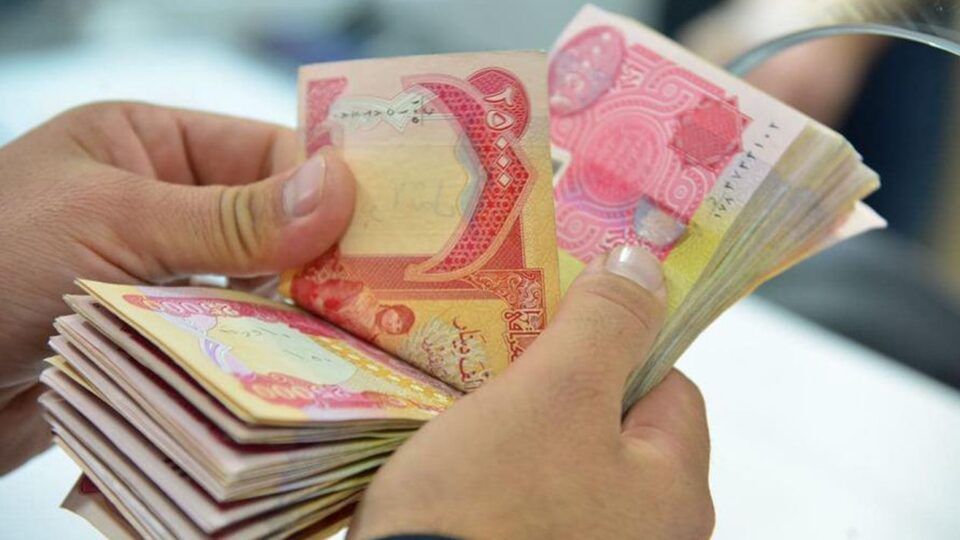
Baghdad’s continued delay in public servant salaries sparks a political outcry, as Kurdish leaders demand constitutional respect and fiscal justice, while accusing Baghdad of weaponizing salaries to weaken Kurdish autonomy.
Kurdistan Region’s salary crisis has reignited deep political tensions with Baghdad, as Kurdish officials accuse the federal government of using public servants’ wages as a tool of pressure. Despite constitutional guarantees and a long-standing role in post-Saddam state-building, Erbil says it is fulfilling its obligations—particularly on oil exports through SOMO—while Baghdad withholds funds. “We have honored every commitment placed on Kurdistan—and even beyond,” said a KRG cabinet statement. Yet Baghdad’s silence on releasing May and June salaries, despite resumed oil flows, is seen as an unacceptable breach. As Kurdistan’s government calls for swift disbursement, frustration mounts in both the political corridors and public squares.
Erbil’s side of the story
On July 2, the Kurdistan Region’s Council of Ministers, chaired by PM Masrour Barzani, convened to address the deadlock. “All conditions have been met—there is no reason for further delay,” the KRG announced, noting that exports via SOMO had resumed and internal revenues were being deposited with Baghdad. The statement warned: “Under no pretext should Kurdistan’s civil servants be deprived of their lawful and constitutional right.” Officials say even the technical audits, staffing records, and salary localization conditions demanded by Baghdad are complete.
Backing this, Iraqi MP Ikhlas Delimi, Deputy Head of Parliament’s Finance Committee, stated: “There are no more technical obstacles to oil exports. We’re just days away from a final agreement.” She added that Kurdistan had shown goodwill and expects salaries for May and June to be released soon.
The KRG remains firm. “We’ve resumed oil exports, submitted our revenue data, and completed all administrative requirements,” the KRG cabinet stated. “Baghdad must now do its part.” The government stressed that failure to release salaries was a violation not only of legal agreements but of human dignity. “Salaries are not a gift. They are a right. And under every law, that right must be protected.”
Oil First, Salaries Later?
KRG officials have long accused Baghdad of linking salaries to political compliance. “Since 2014, salaries have been used as a pressure tool to strip the Kurdish people of their sense of security,” said Pishtiwan Sadiq, a senior KDP member. “Our issue with Baghdad isn’t just oil—it’s land, budget, and constitutional partnership.” Sadiq emphasized that despite constitutional guarantees, Kurdish civil servants are again being punished. “Two days before Eid Al-Adha, Baghdad said it wouldn’t send salaries for eight months. That’s something you wouldn’t expect from your worst enemy.”
As the two sides edge closer to a final oil deal, attention now turns to Baghdad. Will the federal government release salaries? Will this become yet another round in the ongoing political chess match between Erbil and Baghdad? “This cannot go on,” warned Sadiq. “Neither the international community nor Iraq’s own stability can accept this pattern of punishment anymore.”
Voices from Baghdad
Not all in Baghdad agree with the federal government’s approach. Iraqi MP Abdulkarim Abtan stated, “What crime have Kurdistan’s civil servants committed to be denied their wages? Everyone knows salaries are people’s lifeline.” He insisted that the salary issue must be resolved independently of other disputes and in line with the constitution. “Disagreements over oil, airports, or borders should be handled transparently and lawfully—never at the expense of public workers.”
Hussein Allawi, economic advisor to the Iraqi PM, echoed this: “Baghdad and Erbil have no other path than agreement. Once that is reached, the Council of Ministers will hold a special session to approve it.” He said PM Mohammed Shia al-Sudani remains committed to resolving the matter.
Parliamentary disillusionment
Ashwaq Jaff, a senior KDP member, pointed to a deeper issue: lack of federal commitment. “Many in Baghdad don’t believe in federalism. As long as Iraq prioritizes foreign orders over citizens’ rights—from Zakho to Basra—it won’t be a true democratic federal state,” she remarked.
She warned that the federal government had damaged its image globally by withholding Kurdish salaries without any legal basis. “We agreed to all terms and passed them in parliament, but as soon as ministers took office, they backtracked,” she said. “If Baghdad cannot uphold its own constitutional obligations, we will seek third-party mediation or oversight.”
The Kurdish Globe