
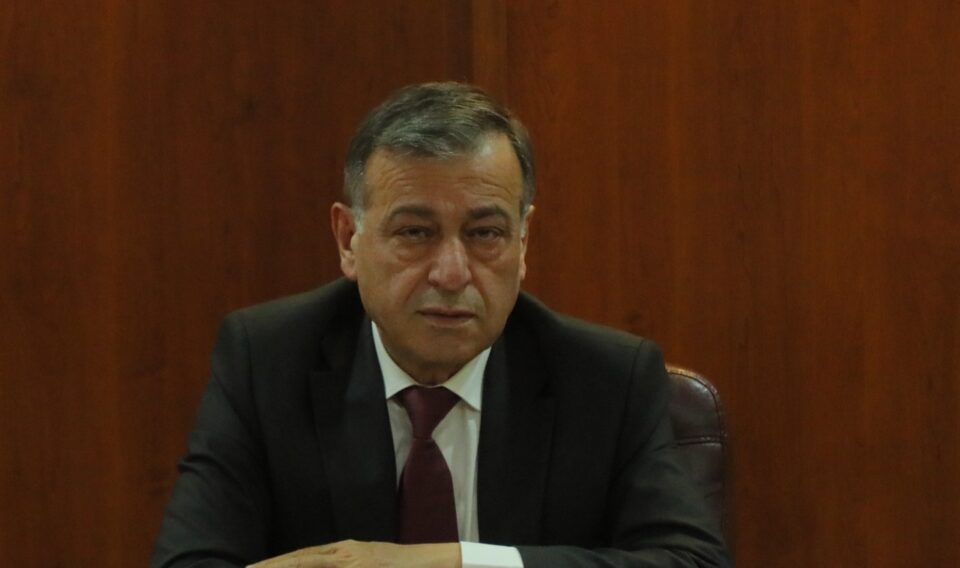
By Farhad Mohamad
Since its establishment in 1921, when the British installed the Hashemite King Faisal as its monarch, the state of Iraq was an experiment. The objective was to forge a modern nation-state through the governance of the Sunni Arab minority within an artificially created country. However, as we have witnessed, not only did Iraq fail to become a modern nation-state, but it transformed into a “state of war and bloodshed,” producing one dictatorship after another. This culminated in a situation so dire that Great Britain itself was compelled in 2003 to join the international coalition to overthrow the dictatorial Ba’athist regime of Saddam Hussein.
Following 2003, a new experiment began, this time led by the United States of America. Acting as an occupying power, it appointed Paul Bremer as the Civil Administrator of the Coalition Provisional Authority and the US attempted to transform Iraq into a “federal, democratic, parliamentary, and pluralistic” state, this time through the governance of the Shia Arab majority. Yet, more than two decades later, this experiment has also failed. Iraq has neither become a functional federal and democratic state nor a true ally of the United States. On the contrary, certain Iraqi Shia Arab groups and militias now openly threaten American forces and interests throughout the region.
These two experiments by Great Britain and the United States, spanning over a century of nation-building, tell us one thing: Iraq, as an artificial state, can never become a modern nation-state where its diverse components and nations can coexist peacefully. Therefore, just as the Trump administration declared to the world in 2017 that the United Nations of 1945 was no longer fit for the America of the 21st century, so too is the century-old structure of a forcibly created state no longer a viable framework for peaceful coexistence. Law and the constitution will never be truly implemented within it.
It is, therefore, the duty of the international community—above all the United States and Great Britain—to correct their mistake of the past 100 years. They must accept the bitter reality that the unity of an artificial state cannot be maintained by force, nor can peace and coexistence be imposed upon it.
The people of Kurdistan, with all their diverse ethnic and religious groups, have struggled for a single goal from the era of King Faisal’s monarchy through all successive Iraqi regimes to this day. They have sacrificed hundreds of thousands of martyrs to make “Iraq a shared homeland for all its diverse components.” This goal has not only failed to materialize but, as the world now sees, the current Iraqi government is waging its worst war against the citizens of the Kurdistan Region. It does not recognize the people of Kurdistan as Iraqi citizens, waging a war of starvation against them by cutting the salaries of public employees and the region’s share of the federal budget. The clear objective is to erase the very existence of a people called “the people of Kurdistan” and an entity known as the “Kurdistan Region.”
History offers a precedent for intervention. In 1991, following the mass exodus of the Kurdish people to end the tyranny of the Ba’athist regime, the UN Security Council passed Resolution 688, creating a safe haven that saved Kurdistan from Ba’athist oppression. In 1996, under Security Council Resolution 986, known as the “Oil-for-Food” program, Kurdistan’s 13% share was separated, preventing Saddam Hussein’s government from depriving its people.
Today, a great moral and humanitarian responsibility once again falls upon the shoulders of the international community, particularly those nations with diplomatic representation in the Kurdistan Region. The actions of the Iraqi government against the Kurdistan Region must not be overlooked. Pressure must be exerted to ensure that Kurdistan’s budget share, similar to the 13% stipulated in Resolution 986, is separated from the Iraqi budget and sent directly to the Kurdistan Regional Government. Furthermore, they must guarantee that the Kurdistan Region remains a haven of stability in a turbulent Middle East.