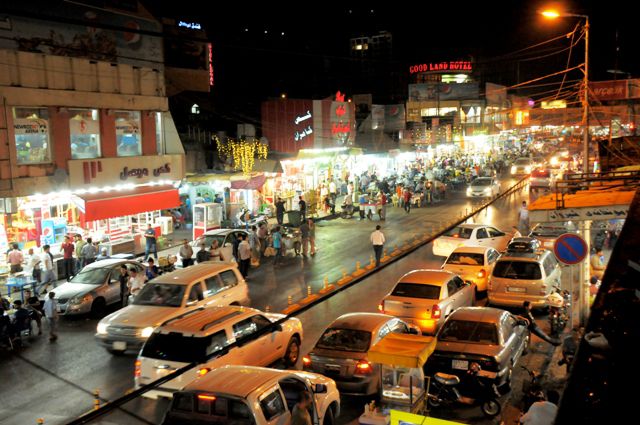
In the heart of Erbil, Iskan Street pulses with life day and night. Nestled in the historic Iskan district, this lively street has become a symbol of the city’s modern rhythm—a blend of rich food culture, football fever, and a welcoming space for both locals and tourists.
First established in 1959, Iskan Street was once a quiet road in the city center. Today, it is one of the most bustling areas in Kurdistan, where shops, cafes, and food stalls stay open into the early hours of the morning.
The scent of grilled meat and spices fills the air as vendors serve a wide range of Middle Eastern dishes. Alongside the food, a unique tea house culture thrives. Young people, drawn by the promise of shared passion and excitement, gather in large numbers at night to watch international football matches on giant screens scattered across the street.
“On match nights, you can feel the energy in the air,” said one café owner. “The crowd cheers together, argues together, laughs together—it’s like one big family.”
While Iskan was once primarily frequented by men, it has now become more inclusive. Tourists, including foreign women, comfortably stroll through the street to enjoy its colorful sights, sounds, and street food.
Today, Iskan Street stands as a cultural landmark—a reflection of Erbil’s evolving identity. More than just a marketplace, it’s a living, breathing space where people gather, connect, and celebrate life long after the sun goes down.