
The U.S. withdrawal from Iraq raises fears of ISIS resurgence and heightened political instability
The withdrawal of United States forces from both Ain al-Assad and Victoria bases ahead of schedule increases uncertainty and political instability in Iraq. It raises the risk of a resurgence of the terrorist organization ISIS, the possibility of targeting Popular Mobilization Forces, and further complicates relations between the United States and Iraq.
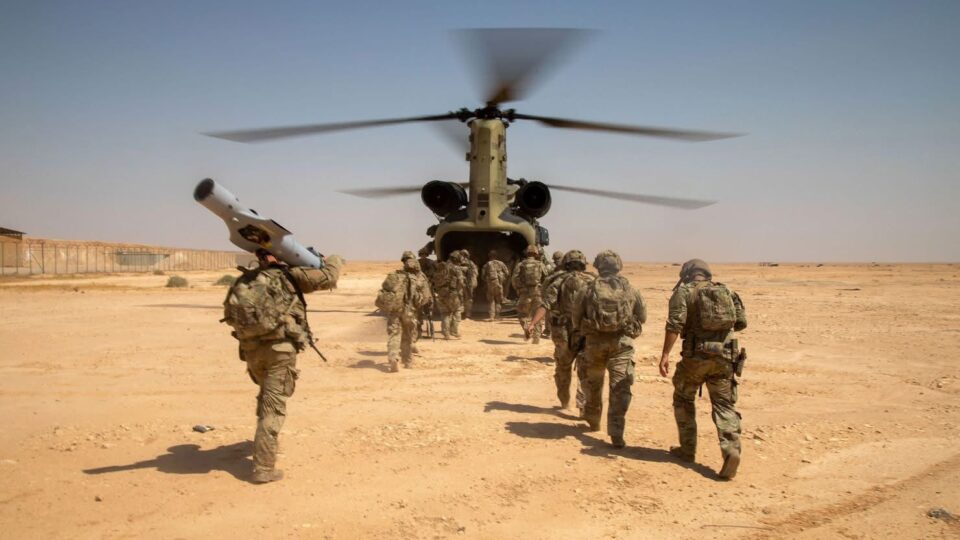
The United States currently has 2,500 soldiers in Iraq and 900 in Syria. In Iraq, the number will be significantly reduced, leaving behind only those described as advisors. In an unexpected move, Washington has accelerated the process of withdrawing its forces from Iraq, transferring soldiers from the Ain al-Assad and Victoria military bases to Erbil and an Arab country. This step, initially planned for November, was brought forward.
The decision comes at a time when Iraq faces new dangers following the fall of Assad: the re-emergence of ISIS and their crossings into Iraqi territory. Pressure has also been placed in Baghdad to repatriate its citizens held in al-Hol camp. Although some families have been returned, concerns remain that their reintegration could negatively affect Iraq’s security. In parallel, efforts are underway in parliament to pass the Popular Mobilization Law, which the United States strongly opposes.
Before the fall of Assad, Iraq was split between two opinions. Shiite factions, under Iranian influence, argued that ISIS had ended and there was no need for American or allied forces. On the other hand, Kurds, Sunnis, and part of the Shiite bloc maintained that ISIS still posed a threat to Iraq and the wider region, requiring more support and the continued presence of the international coalition.
Saman Shali, a Kurdish politician and international relations expert, told The Kurdish Globe: “If America withdraws from Iraq, all allied forces will follow. They were supposed to withdraw on November 10, one day before Iraq’s elections, but expedited it to September. Most have already withdrawn and relocated to the Kurdistan Region. America is no longer present in Ain al-Assad or Victoria bases. This has created great fear in Iraq. Some Shiites oppose the American withdrawal, but under pressure from the Popular Mobilization Forces, Prime Minister Mohammed Shia’ al-Sudani made this decision. Sudani is caught between two fires: how to satisfy both Shiites and America during elections. At the same time, the relocation of forces to the Kurdistan Region underscores its stability and strategic importance for America.”
He added: “America will never completely leave Iraq, because it may relocate to the Kurdistan Region, which is still Iraq. It has vital interests, including its embassy and consulates, which require military protection. From Kurdistan, it can also provide logistical support to its forces in Syria. The agreement for America’s withdrawal from Iraq was made during Joe Biden’s administration, while Donald Trump’s government has not officially commented. The units that have left are joint security forces, meaning Baghdad will no longer receive critical intelligence on ISIS. This is a major loss, as these units had close coordination with the Iraqi army. What remains are advisors, whose number will gradually decrease. Meanwhile, Iraq’s arsenal, especially its aircraft, depends on American supply. Washington’s interests in Iraq are significant, and it will not easily leave the country to Iran.”
Looking ahead, Shali noted that September will be pivotal for Iraq, particularly amid the Israeli-Iranian conflict. He warned that America is also concerned about the passage of the Popular Mobilization Law, which has already been read twice in parliament. While Shiite blocs hold enough votes to pass it, Kurds, Sunnis, and even some Shiites oppose it. “For America and Britain, Hashd (PMF) is a backdoor for Iran,” he said. “They fear the creation of an army similar to Iran’s Quds Force inside Iraq.”
He emphasized: “Erbil is a stable strategic location for America with strong political geography, particularly in supporting U.S. forces in Rojava. What is also important is Kurdistan’s wise stance during the Israeli-Iranian war. Regarding America’s withdrawal, Kurdistan considers the continued presence of these forces essential. If Iraqis carefully study the region, America’s departure will allow ISIS to regroup, as Ain al-Assad was crucial for countering ISIS. Withdrawal will also make it easier for Israel to strike Iraqi militias, as Iraqi airspace is already being used for attacks.”
Although Baghdad and Washington had agreed that the mission of the international coalition in Iraq would formally end in September 2025, the United States has notified the Iraqi government of its decision to accelerate the withdrawal and not adhere to the original schedule. With the start of the withdrawal, the Popular Mobilization Law has returned to the political debate.
Hakim Hamdi Gali, former military advisor to late President Jalal Talabani, told The Kurdish Globe: “Washington believes that passing the law strengthens Iran’s hegemony in Iraq and sees it as an escalatory step that could force a reassessment of U.S. security commitments. In contrast, many Iraqi forces view approval of the law as a sovereignty card that establishes a new security framework after the coalition’s departure.”
He continued: “If America withdraws from Iraq, the situation will worsen, and Iraq may face a new war. The country will become a pressure tool in the hegemonic conflict between Washington and Tehran, placing the Iraqi government in a complex equation between national sovereignty and regional balances.”
He also noted: “Because America’s accelerated withdrawal creates a difficult equation, Washington is trying to reduce its commitments without losing its influence, while Baghdad stresses the readiness of its forces and prioritizes national security. The U.S. withdrawal could trigger an ISIS resurgence, weaken diplomatic relations with Baghdad, and have negative economic consequences. In general, relations will deteriorate.”
Gali further suggested that the timing of the withdrawal may be linked to targeting resistance forces and the Popular Mobilization Forces ahead of the elections, to prevent them from influencing the outcome for their own political gain.
The Kurdish Globe