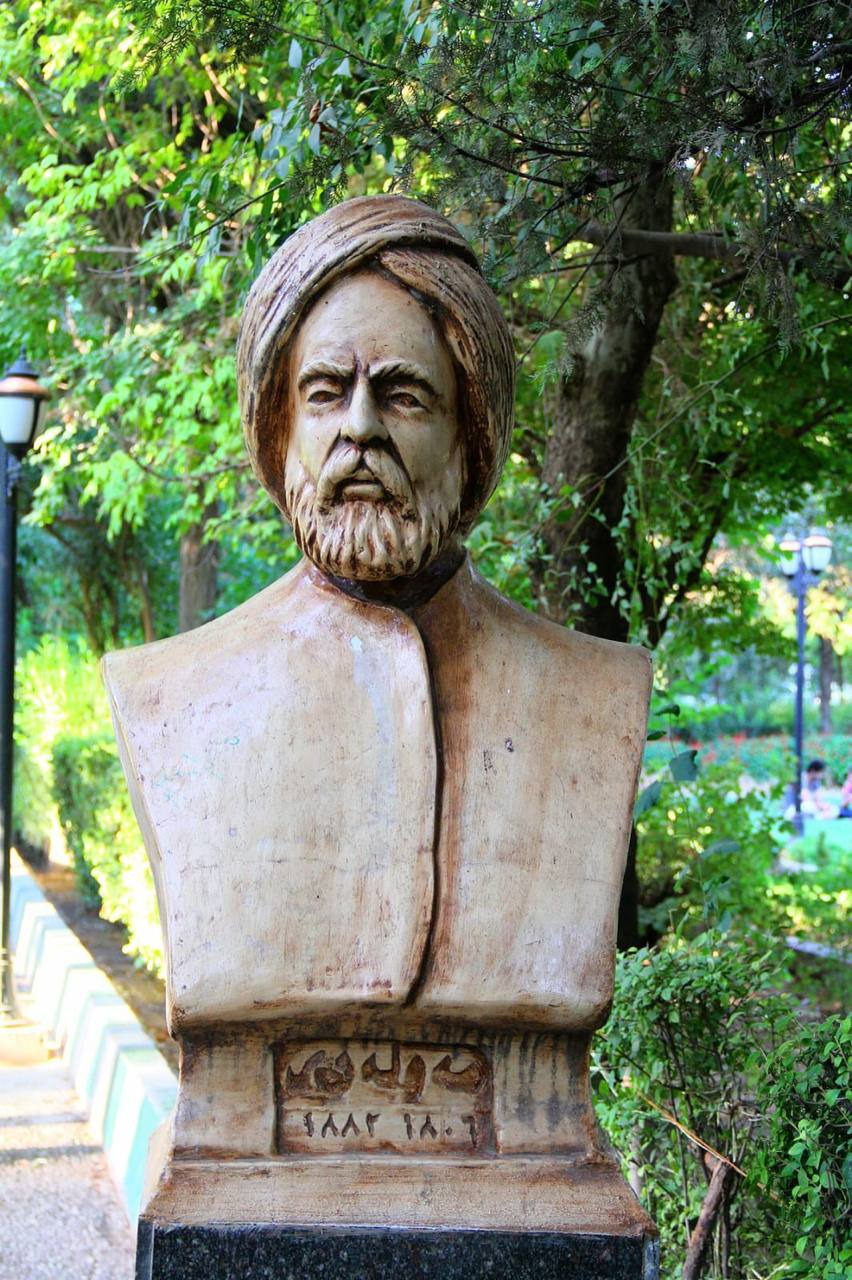
The real name of Sayed Abdulrahim, son of Saeed Tawegozi, appears in his works as “Ma’doom,” but among readers he is best known by the pseudonym Mawlawi, under which his literary fame endures.
Mawlawi was born in 1806 in the village of Sarshatah in the upper Tawagozi region. Like most intellectuals and scholars of his era, he first learned to read and write through the traditional hujra (religious school) system. His strong passion for knowledge, however, drove him to seek advanced learning in the major cultural centers of the Ardalan and Baban regions.
During his studies, Mawlawi lost his father, and his life became one of poverty and hardship. Forced to leave school to support his siblings, he eventually returned to his education. In Sulaymaniyah, under the guidance of Mullah Abdulrahman Nawdshi, the deputy mufti of Sulaymaniyah and teacher at Malkandi Mosque, Mawlawi completed his studies and earned a license to teach.
He later became engaged in teaching and religious leadership in Halabja and surrounding villages. Significantly, Mawlawi’s literary works reflect the influence of his wife, Anbar Khatun, who died seven years before him.
Anbar Khatun, one of the few Afghans to migrate to Kurdistan, shared a loving life with Mawlawi. After her death, the world turned dark for him, and he composed several sorrowful poems in her memory. These poems are considered among the finest examples of love and mourning in Kurdish literature.
Mawlawi had several children. One son, Sayed Muhammad, died before him and was buried in the village of Gundah. Another son, Sheikh Muhammad, married and had a son named Ali but also died young.
Mawlawi was known as a warm presence, skilled in conversation. Those who attended his gatherings listened attentively to his speeches, which carried both eloquence and wisdom.
His literary works
Mawlawi’s works remain celebrated as masterpieces of Kurdish literature. His knowledge of Arabic and Persian, alongside Kurdish, enriched his writing and allowed him to compose in multiple languages. His divan, written in the Hawrami dialect, holds a distinguished place in Kurdish poetry.
Among his notable works are:
• A Kurdish book in verse on Islamic creed and beliefs (unpublished).
• Al-Aqidah al-Mardiyah, a Kurdish book in verse on Ash’ari creed, containing more than 2,000 verses. Mawlawi himself wrote commentary on it, as did later scholars. Copies survive in the collections of prominent clerics.
• Al-Fawayih (“The Fragrant Things”), a Persian book in verse on Muslim creed, containing more than 1,000 verses. Published in Egypt by his student Khoshbu (Muhyi al-Din Sabri al-Na’imi al-Kani Mishkani).
• A Persian treatise on the practice of “Rabita” (spiritual connection) within the Naqshbandi order (unpublished).
• Al-Fadilah, a book of Arabic religious poetry, comprising 2,031 verses on the principles of religion (Usul al-Din). This work, written at the command of Sheikh Muhammad Baha’uddin, was widely read in his lifetime.
His Passing
Mawlawi died in 1882 and was buried in the Ashab cemetery in Sarshatah, laid to rest on a hill overlooking his birthplace.