
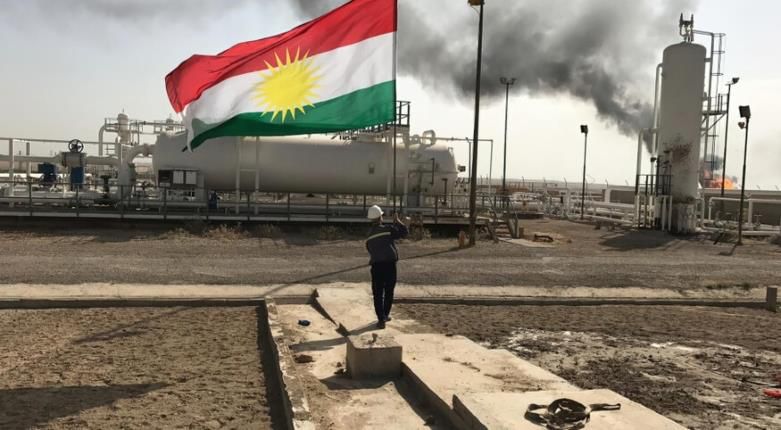
Peshawa Hawramani, KRG Spokesperson, says the three-month oil deal with Baghdad ensures salaries now, but next year talks will move to the broader federal budget.
In an interview with The Kurdish Globe, Peshawa Hawramani spoke about the recent Erbil–Baghdad agreement on salaries. He noted that a three-month oil agreement has been signed with Baghdad, but afterward, talks will move beyond salaries to the broader issue of the budget.
Kurdish Globe: What was the outcome of the latest Erbil–Baghdad talks on salaries?
Peshawa Hawramani: The Iraqi Council of Ministers issued a decision on oil and non-oil revenues, requiring Erbil to reach an agreement in order to guarantee salary payments. We have implemented both conditions. This shows that Prime Minister Masrour Barzani has always sought solutions from the beginning of these issues. Whatever was requested from Baghdad, the Council of Ministers and the Ministries of Finance and Natural Resources supported. We, in turn, showed goodwill.
Now, on oil, the Kurdistan Regional Government (KRG) is preparing for the agreement already signed. What matters to us is that the law must be applied so such problems are not created again. Based on this, Baghdad should transfer Kurdistan’s salaries. We will return to the table in the new year to negotiate the 2026 budget. The KRG will demand a full budget, not just salaries. These talks cannot continue in a piecemeal way — the problems must be resolved.
The current agreement between Erbil and Baghdad is for three months, until December. Then, at the start of the new year, we will enter talks on the full federal budget, oil, and all other issues. The three-month agreement is not tied to this year’s salaries — it relates to oil. After these three months, Erbil–Baghdad talks will move into a new phase.
Kurdish Globe: What about this year’s salaries for KRG employees?
Peshawa Hawramani: If Iraq abides by its commitments, not a single salary will be lost. Despite all the political and financial pressure on this government, we have not stopped service projects. In this cabinet we have implemented 56 investment projects, 41 residential projects, 116 industrial projects, 101 commercial projects, 17 agricultural projects, 40 education projects, 27 health projects, and 9 sports projects. In the investment sector alone, 403 projects have been carried out by our own companies.
On digitization: the government has invested in electronic systems — an e-commerce system, an e-visa portal, and electronic services for citizens including “My Account.” On electricity: Halabja station (300 MW), Garmian (165 MW), Deraloul (38 MW), Bazian (750 MW), and solar (250 MW). Together with new capacity in Erbil, Sulaymaniyah, and Duhok, we have added 1,340 MW of power. We have built 152 new schools, renovated 1,670, completed major roads (150-meter and 120-meter roads in Erbil, Duhok road, 100-meter in Sulaymaniyah, Sheikhan–Lalish Road, Darbandikhan–Kalar road, Erbil–Koya road), all funded by local revenues despite the pressures.
Kurdish Globe: Many citizens are waiting for new jobs. What is the situation?
Peshawa Hawramani: Iraq has not opened the door to new employment. The federal government has appointed more than a million people for itself, but none for us. In many sectors, Baghdad has acted only for its own benefit, not recognizing the rights of the Kurdistan Region.
Kurdish Globe: How will Kurdistan’s oil be delivered to SOMO?
Peshawa Hawramani: Currently, Kurdistan has the capacity to produce 234,000 barrels of oil per day. Oil for local needs is kept here; the remainder — for companies and the federal government — has been documented. The tripartite agreement is in place, with only minor technical points left. The KRG is ready and has formally requested to hand over oil at Fishkhabur. We are waiting for a response. The delay is not due to neglect. These matters will be resolved. What is important is that we are fighting to ensure that Kurdistan’s employees do not miss a single salary.
Kurdish Globe: What about the six months of salaries owed?
Peshawa Hawramani: We must return to the beginning. They said oil and non-oil revenues should be shared. We agreed, and there should be no obstacle to salaries. If they act in good faith, all monthly salaries will be paid.
Kurdish Globe: Can we say Erbil and Baghdad are closer now?
Peshawa Hawramani: We want this agreement to be the beginning of a solution for Erbil–Baghdad disputes. There is no obstacle now to exporting Kurdistan’s oil. In 2026, the KRG will formally request its full share of the budget, not just salaries. As for this year’s salaries, the lists are ready, and we want them distributed quickly. If Baghdad keeps its commitments, no employee in Kurdistan will miss their pay.
On local revenues: the Region’s income is clear. In this ninth cabinet, more projects have been implemented than ever before, and all of them have been funded from internal revenues.
The Kurdish Globe