
Duhok province is home to numerous archaeological sites, with research and excavation ongoing to uncover more of the region’s ancient history. Recently, a French production company visited Duhok to create a documentary highlighting these sites, which is expected to be completed in 2024 and broadcast in France and other countries worldwide.
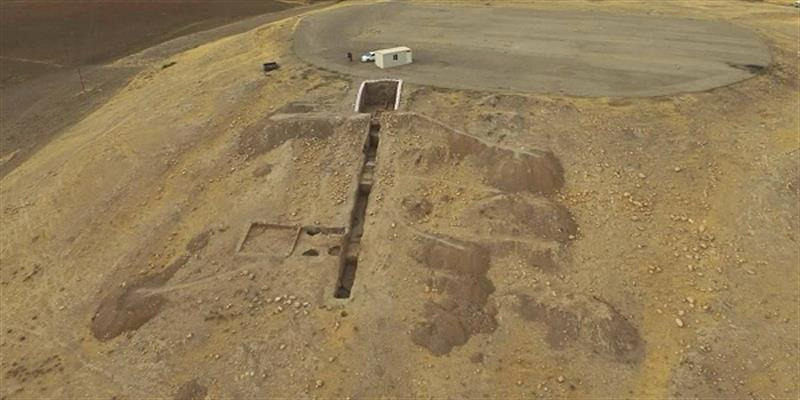
Excavations at the Gird-i Bastkê site, conducted by a team from the University of Tübingen in Germany, revealed surprising discoveries. Archaeologist Behzad Doski stated that after four years of work, the team uncovered 92 written texts dating back 3,200 years, 90 of which were in Assyrian cuneiform, identifying the city as Mardaman, sometimes called Mardamash.
Doski explained that while international media initially misreported details, the truth is that Mardaman predates Assyrian history. It was founded by the Hurrians, ancestors of the Kurds, in the mid-third millennium BCE. The city was attacked by King Naram-Sin of Akkad in 2250 BCE, and later by the Akkadians, Sumerians, and Assyrians. Despite repeated conquests, historical evidence shows that Mardaman occasionally maintained independence under rulers like King Tish-Ulme.
The Director of Archaeology and Heritage in Duhok emphasized Mardaman’s significance as a political and commercial hub connecting the valleys of two rivers with Anatolia and Syria. In 1787 BCE, the city was briefly conquered by Assyrian King Shamshi-Adad before regaining independence. Cuneiform inscriptions from 1250 BCE, discovered buried under dirt, appear to have been deliberately hidden to preserve sensitive administrative, commercial, and military information during times of invasion. The city continued to prosper under Assyrian rule until the Median conquest in 612 BCE.
Unlike other archaeological sites in Kurdistan, Gird-i Bastkê has remained intact, free from vandalism, giving researchers hope for further discoveries in future excavation seasons.
The director highlighted ongoing collaboration with international universities across six sites in Duhok province. These include: Gird-i Bastkê and Gird-i Muqbele in Simele district with the Universities of Tübingen and Freiburg; Faidiya Cave and Gird-i Asngeran in Bardarash with the University of Udine in Italy; Gird-i Zeid in Simele with Ca’ Foscari University; and Khenes in Shekhan with the University of Udine.
Dr. Bekas Brifkany, Director of Archaeology in Duhok, announced that the new excavation season has begun under the supervision of the directorate and in cooperation with German and Italian universities. Work includes excavations at Gird-i Bastkê, Gird-i Muqbele, and Faidiya, restoration of damaged maps, creation of an archaeological park, and other preservation projects.
In addition, the BambooDoc company from France is producing a 90-minute documentary for France Télévision, showcasing Duhok’s archaeological sites, ancient civilizations, and the Assyrian Empire. Known for broadcasting on National Geographic and Netflix, the company’s work represents a major milestone in presenting Kurdistan’s heritage to an international audience, supported by the Kurdistan Regional Government and foreign university partnerships.