
By Younes Mohammad
Everywhere, the air was thick with the smell of gunpowder and blood. The walls were scarred from explosions, blackened with soot, and the ground was littered with shapes that looked like corpses but as you got closer, it became clear they were no longer human, bloated and twisted, resembling anything but life.
After hours of negotiation, we finally secured permission to enter this newly liberated city, to see it for ourselves and to take photographs. Warnings lingered: danger remained, and nothing had been fully cleared. A few Peshmerga accompanied us, to ensure our safety.
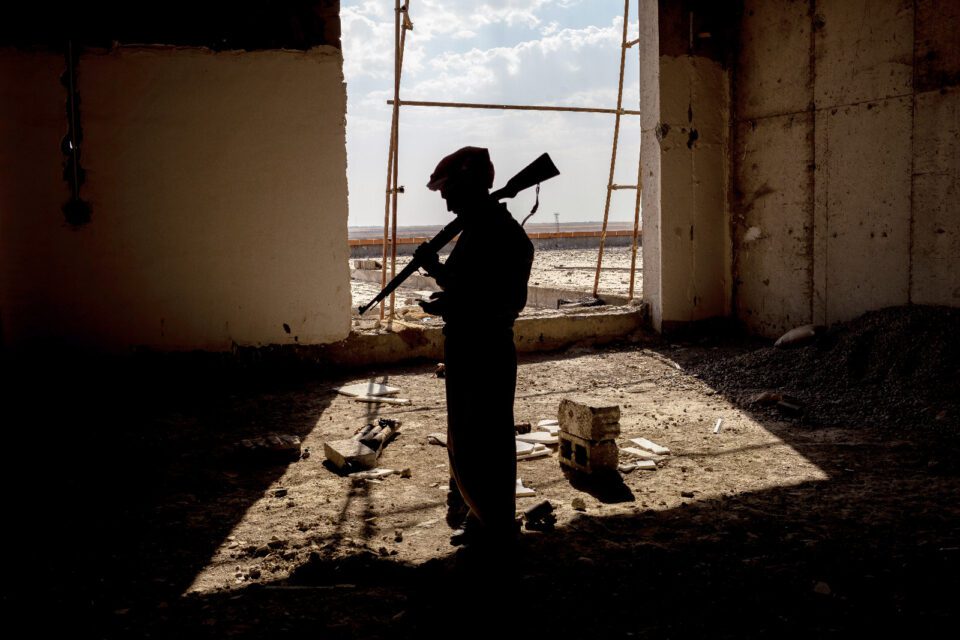
One of them, an elderly Peshmerga wearing traditional Kurdish clothes, non-military, with an old Brno rifle that seemed to have come from his youth, was like a living shield. He would enter every place first, ensuring it was safe before letting us follow. A man perhaps as old as my father or even my grandfather his presence on the battlefield raised countless questions in my mind: why is he here? How many bullets can that old rifle fire? What keeps him in this warzone?
Curiosity overcame me. I asked, “Why have you stayed here? At your age… what keeps you?”
He paused for a moment, then replied quietly, “I volunteered. I couldn’t leave these kids alone.”
With that old Brno in hand, he watched over all the young fighters. He brought them water and bread, told jokes to lift their spirits, and even though when he was exhausted and hungry, he made sure to make them happy. Every movement, every decision revealed the weight of experience and responsibility he had carried for decades.
By noon, he stepped aside to make a phone call. When he returned, I asked, “Who were you calling?”
He said, “The mother of one of the boys. She had called several times yesterday, worried about him. I told her he’s safe and not to worry.”
All day, until late afternoon, he led the way while we followed, photographing the ruins, and I couldn’t stop thinking about him. His gaze, his every movement, gave us an unexpected sense of security. We, the young fighters, had become his sons.
And at the end of the day, when we had a brief moment of calm, one of the younger Peshmerga quietly told me: “His own son was killed in the early days of the war… He cannot tell his wife the truth. That’s why he stays here, to watch over us, and every day he tells her that her son is safe and will return soon.”
And so he remains—not for himself, not for peace, but for others. For the children he watches over, and for a woman who still does not know that her son has died. The bitter truth remains only in his silence, and in the words of the young fighters.