
By Younes Mohammad
A few months had passed since the war with ISIS had come to an end. Life was trying, hesitantly, falteringly, to return to something resembling normalcy. But normal is not something you can rebuild. War ruins you so completely that “normal” becomes a distant, unattainable dream.
The fighting was over, yet every day I still wandered from place to place with my camera, trying to capture the unseen and unheard remnants of those years of terror.
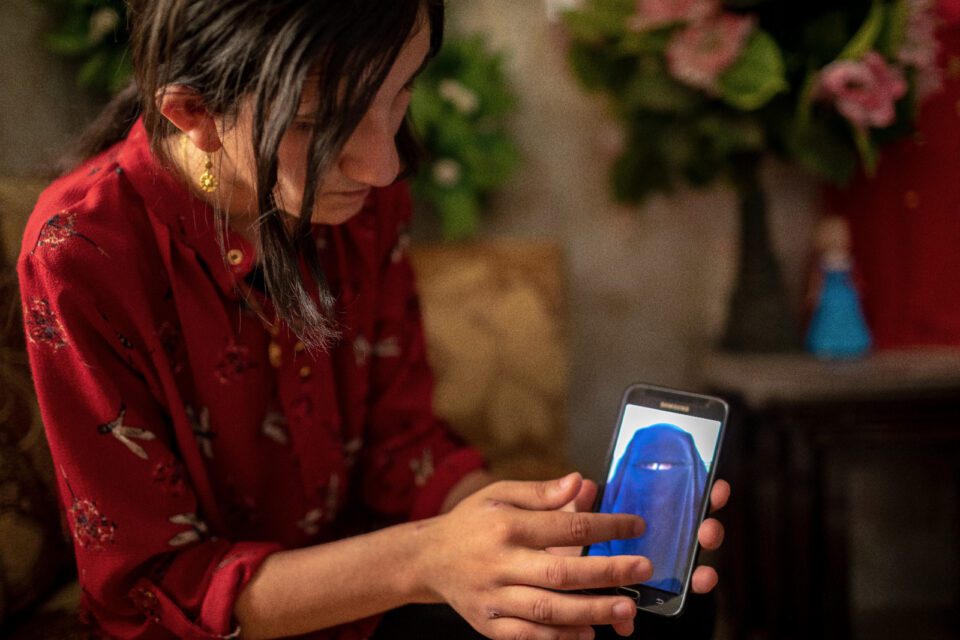
Word spread about another Yazidi girl who had escaped after four years of ISIS captivity. No one knew where she lived now. They said she had no remaining family, and because of that, she moved from one town to another every few weeks. Finding her was nearly impossible, but I kept searching.
Then one day a friend called.
“If you want to see her,” he said, “now is the time. I know where she is.”
I had guests that day, one of them a filmmaker, but we left together to go meet Sherihan.
I wish I hadn’t seen her.
I could not believe a human being could be reduced to what she had become. She didn’t look like a girl, she barely looked like a person. It was as if the Angel of Death had come for her moments earlier and she had begged for a little more time, just enough to see us before she surrendered. She was nothing but skin stretched over fragile bones. I couldn’t imagine she had the strength to speak. She was so frail, so shattered, that simply looking at her felt unbearable.
Suddenly I remembered something from my childhood, the day our street erupted in noise because the neighbor’s son had finally returned from years of captivity during the Iran–Iraq war. I was just a child then, wanting to run to their door and welcome him home, but I couldn’t bring myself to do it. I ended up writing a poem for him instead, slipping it to his family. Even now, when I think of that boy, fear tightens in my chest. War does that to people; it makes you afraid even of those who survived it.
But Sherihan’s story was different. She hadn’t gone to war. She wasn’t a soldier. She didn’t choose any of this. She was far too young. Sherihan had been a sheltered, gentle girl, a child who knew nothing beyond her home, her school, and the innocent dreams of becoming a teacher or a doctor someday. But war came for her. War walked right into her house, tore her away, and smashed every dream she ever had, hammered them to pieces so thoroughly that no one could ever dare dream again.
She spoke slowly, carefully, weighed down by shame for crimes that were not hers. She told us what had been done to her, things so violent that even repeating the words felt unbearable. In the hour or two we spent with her, I felt myself die a thousand times. I felt ashamed of being human.
She told us: “Whenever one of them got tired of me, they’d hand me over to someone else… In those four years, I was passed around so much I lost count of how many of them killed me. How many of them crushed my body and my soul…”
As a child, I had adored a singer named Sherihan; her voice, her songs, everything about her. But now, when I hear that name, nothing beautiful comes to mind. Only war. Only misery and the catastrophe of human cruelty.
This Sherihan was no longer the beautiful girl she once was, war had stolen all her beauty and handed it to the devil. What was left of her was nothing but cracked bones and wrinkled skin. War had aged her, aged her brutally, in the very years she should have been young.
For months, we stayed in touch. As with Nadia and the other girls I had met, an inexplicable bond formed between us, an intimacy that made us confidants, guardians of each other’s secrets. We spoke often. But some time ago, when I messaged her to ask how she was, she didn’t reply. I tried again. Silence.
When I finally asked about her, I learned the truth: Sherihan was no longer among us.
The pain, the wounds, the years of torture, everything she had carried, had finally done what her captors had been trying to do all along.
Sherihan could no longer breathe.
War killed her.