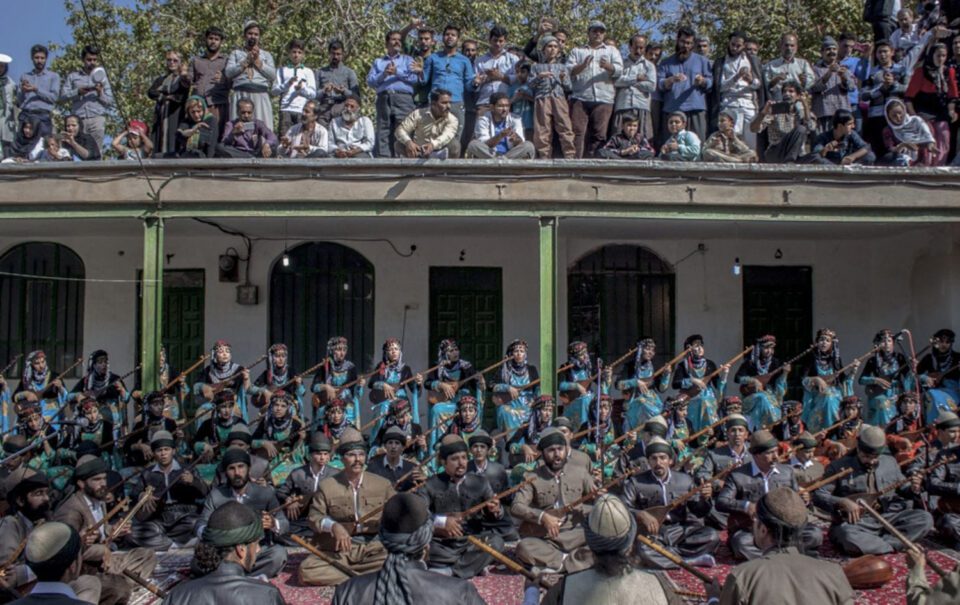
The Yarsan, also known as Kakayi, constitute one of the most ancient and authentic Kurdish religious communities, preserving beliefs and philosophies that date back thousands of years. The roots of Yarsanism lie in Lorestan and the Goran and Hawraman regions, with followers spread across much of Kurdistan, particularly in Kermanshah and Lorestan, as well as Halabja, Hawar village, Garmian, Garmisar, Kirkuk, and the Nineveh Plain.
Historians offer varying interpretations of the name Yarsan. Some trace it to “Yarsultan,” a reference to Sultan Sahak, while others explain it as meaning the place of the yar, or companions, and the followers of Ahl e Haqq. Another interpretation links it to “yar i san,” signifying loyalty to the king or lord. The community is also widely known as Kakayi. Scholars believe the foundations of the Yarsan faith extend back to the era of Mithraism, approximately four to five thousand years ago, with many Mithraic elements still preserved.
Although the religion’s origins are ancient, Sultan Sahak, also known as Sultan Suhak, is regarded as the central founding figure who organized and shaped the belief system in Kurdistan. Among the earliest revered figures of Yarsanism is Baba Tahir Hamadani, whose writings appear in Saranjam, the most sacred Yarsani scripture.
Each year, Yarsanis and Kakayis observe the Qawltas festival, also known as the Three Nights of the Companions. In the Kurdistan Region, these religious ceremonies are marked by hymns, fasting, and communal gatherings. On this occasion, President Barzani and the Kurdistan Regional Government extended congratulations to the community and reaffirmed their support for religious coexistence in the region.
According to Yarsani tradition, Qawltas commemorates seven companions chosen by Sultan Sahak to manage social affairs. During a journey to meet him in Hawraman, the companions were overcome by exhaustion near Mount Shaho in present day Pawa. Their trial and eventual salvation form the spiritual basis of the three day fast observed during the coldest period of winter.
The Qawltas fast begins on the fourteenth day of the winter Chilleh and lasts for three days, culminating in a festival marked by celebration and thanksgiving. Ceremonies are held over five days in total and include communal meals and sacred offerings such as girdeh bread, lamb stew, sacrificial items, and symbolic foods. These rituals take place in the Jamkhaneh, the Yarsani sacred gathering space, reinforcing faith, tradition, and communal bonds.