
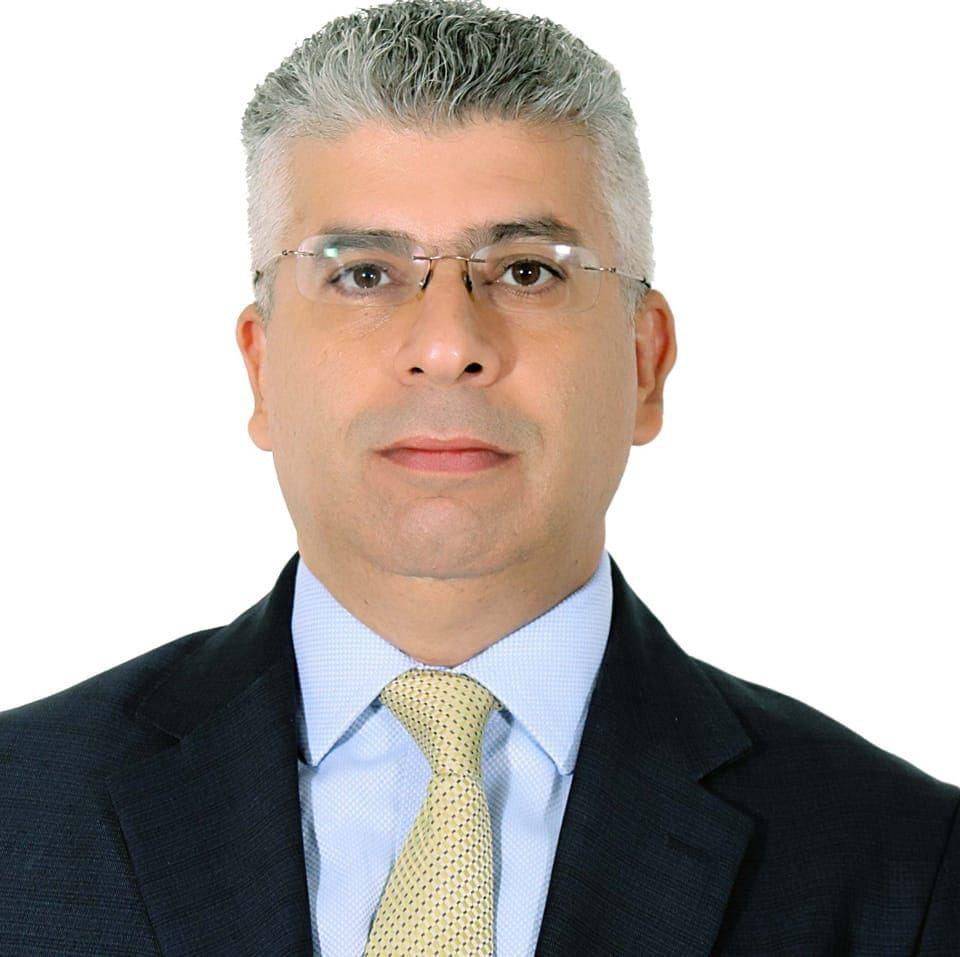
By Miran Hussein
Paradiplomacy is a relatively new concept in the fields of politics and international relations. It refers to the diplomacy conducted by non-state actors within the international system. This phenomenon emerged as a result of the expanding scope of international relations and the involvement of non-sovereign entities—such as regions, cities, and provinces—that participate in global affairs despite not being independent states.
Following the 1991 uprising (Raperin) of the people of Kurdistan, the Kurdistan Region emerged as a de facto authority. In the first phase, between 1992 and 2003, the Region managed to establish a series of foundational relations with neighboring countries and international organizations, despite numerous obstacles. These challenges included the skeptical perspectives of neighboring states toward the Kurdish cause and the internal consequences of the civil conflict. During this period, relations were primarily commercial in nature or focused on managing a de facto political power within a specific geography. The reality of the situation dictated that even though the Kurdistan Region was not a sovereign state and was outside the control of the Ba’ath regime, it could not remain isolated from international ties—especially given its formal institutions elected by the people and its undeniable de facto status. Thus, the early stages of the Kurdistan Region’s paradiplomacy began simply in the post-uprising era and continued until the fall of the Ba’ath regime.
However, in the stage following the fall of the Ba’ath regime and the subsequent recognition of the Kurdistan Region by the Iraqi Constitution as a constitutional region, a massive door was opened for the Region to establish organized diplomacy similar to that of independent states. This was achieved through the creation of specialized institutions for foreign affairs within the government, the opening of representative offices worldwide, and the establishment of consulates by dozens of countries within the Region. Furthermore, the invitation of Kurdish officials to official summits and the reception of high-ranking foreign dignitaries in the Region serve as evidence that the Kurdistan Region has become a prominent global model for paradiplomacy.
The success of the Kurdistan Region’s paradiplomacy lies in the long-term strategy adopted by its political leadership. They sought to present the Region as an acceptable actor characterized by a steady and moderate policy, working to build an extensive network of political and diplomatic relations with states, organizations, and influential figures. This approach paved the way for the Kurdistan Region to emerge as a strong and recognized entity that is respected internationally, often in a manner comparable to an independent state.
The participation of His Excellency Nechirvan Barzani, President of the Kurdistan Region, in the annual Munich Security Conference—a high-level global gathering—comes just days after His Excellency Masrour Barzani, Prime Minister of the Kurdistan Region, participated in the World Economic Forum in Davos and the World Government Summit in Dubai. Additionally, President Masoud Barzani’s visit to the Vatican, his meeting with the Pope, and his discussions with Italian state officials are just a few examples among hundreds that prove the success of the Kurdistan Region’s paradiplomacy. These activities demonstrate that although the Kurdistan Region is not a sovereign state, it exists as an international actor alongside independent nations.
One of the significant achievements of this paradiplomacy was the Kurdistan Region’s efforts to protect Rojava (Western Kurdistan) when there was a serious threat to the survival of Kurds there. The role of Kurdistan Region officials, their relations with global powers and world leaders, and their mediation efforts proved that the Region possesses a strong and effective diplomacy. The participation of Rojava officials in the Munich Conference was influenced in part by the paradiplomacy of the Kurdistan Region, occurring at a time when they had faced threats of annihilation only weeks prior. Leaders in Rojava acknowledge that Kurdistan Region officials played a decisive role in protecting Rojava, facilitating ceasefire agreements with the Syrian government, and safeguarding the Kurdish people.
Therefore, the Kurdistan Region’s paradiplomacy has not only succeeded in building a strategy for international relations that protects the Region itself, but it also demonstrates an ability to protect and advance the interests of other parts of Kurdistan. The success of the Kurdistan Region’s paradiplomacy is a victory for all Kurds.