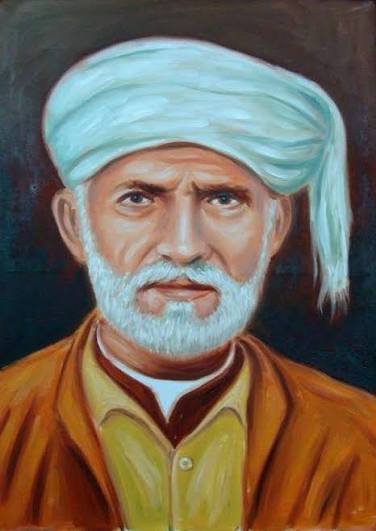
Rich Kurdish literature is filled with remarkable writers and thinkers whose influence continues to resonate across generations. Among these enduring figures is Safi Hirani, a poet whose work remains deeply rooted in the cultural and spiritual life of the Kurdish people.
Born in 1873 in Hiran, in the Khoshnawati region, Safi Hirani, whose real name was Mustafa, son of Kak Abdullah II, grew up in a devout and respected family. He began his religious education as a faqe under his father, Mullah Abdullah, and Qazi Ali. His pursuit of knowledge took him across Southern and Eastern Kurdistan.
At the age of 30, following the death of his father, he assumed his role as a spiritual leader and became widely known as Kaka Mustafa of Hiran, continuing the traditions of the Qadiri Sufi Order. This marked a turning point in his life, as he dedicated himself more fully to spiritual guidance and religious devotion.
Safi Hirani began writing poetry at just fourteen, producing works that combined themes of love, spirituality, and mysticism. His poetry reflects a deep connection between the divine and human realms, often described through the concepts of Lahut and Nasut. Like renowned Kurdish poets such as Melayê Cizîrî, Mela Hîrî, and Mahwi, he skillfully blended Sufi philosophy with literary expression.
His Diwan, a comprehensive collection of poetry, is considered one of the most influential works in Kurdish literature. Many of his poems have been adapted into songs and performed by well-known Kurdish artists such as Tayar Tofiq and Adnan Karim, further cementing his place in cultural memory.
Safi Hirani’s poetry continues to be recited by dervishes, often accompanied by the rhythmic beat of the daf, reflecting both its spiritual depth and artistic beauty. His work remains open to interpretation, inviting ongoing study and appreciation.
He passed away on February 12, 1942, and was buried in his hometown of Hiran, in a grave he had prepared himself. His legacy endures as a powerful symbol of the union between Kurdish literature and Sufi spirituality.