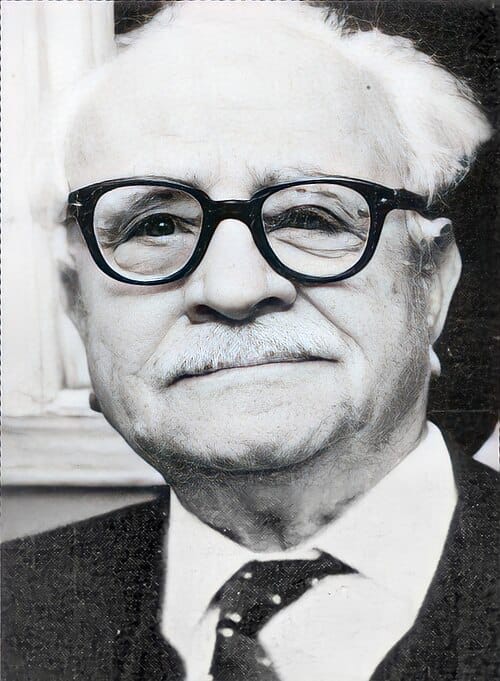
Tawfiq Wahby Beg was one of the most influential Kurdish intellectuals and political figures of the twentieth century, known for his contributions to military service, Kurdish scholarship, and public life in Iraq.
Born on January 1, 1891, in Chwarta within the Sulaymaniyah Governorate, Wahby completed his early education in Sulaymaniyah before moving to Baghdad and later to Istanbul, where he studied at the Ottoman Staff College and became an officer in the Ottoman Army.
During World War I, he fought in several major battles, including the Gallipoli campaign and battles in Iraq and Palestine. He later received a bravery medal from a German commander while serving with Ottoman forces allied with Germany during the war.
After the collapse of the Ottoman Empire in 1918, Wahby returned to Kurdistan and became one of the Kurdish officers involved in establishing the Iraqi Army in 1921.
In 1922, he joined the movement of Sheikh Mahmud al-Hafid after the Kurdish leader returned to Sulaymaniyah and resumed leadership efforts in the region. Following the suppression of the movement by British forces, Wahby was imprisoned for a short period before later returning to government service.
Throughout his career, he held several senior positions in Iraq, including Director of the Military School in Baghdad, governor of Sulaymaniyah, Minister of Economy, Minister of Defence, and Minister of Education. He also received advanced military training in United Kingdom during the late 1920s.
Beyond politics and military service, Wahby became widely respected for his work in Kurdish language studies and history. Following the establishment of the Kurdish Academy of Science in 1971, he was named an honorary member and published numerous studies and research papers, including works written in English.
After the Iraqi Revolution of 1958, Wahby moved to London, where he spent his later years researching Kurdish history and linguistics.
He died in London on January 5, 1984, at the age of 93. In accordance with his wishes, his remains were returned to Sulaymaniyah and buried on Mount Pirmagrun beside the shrine of the Kurdish holy figure Pirmagrun.