
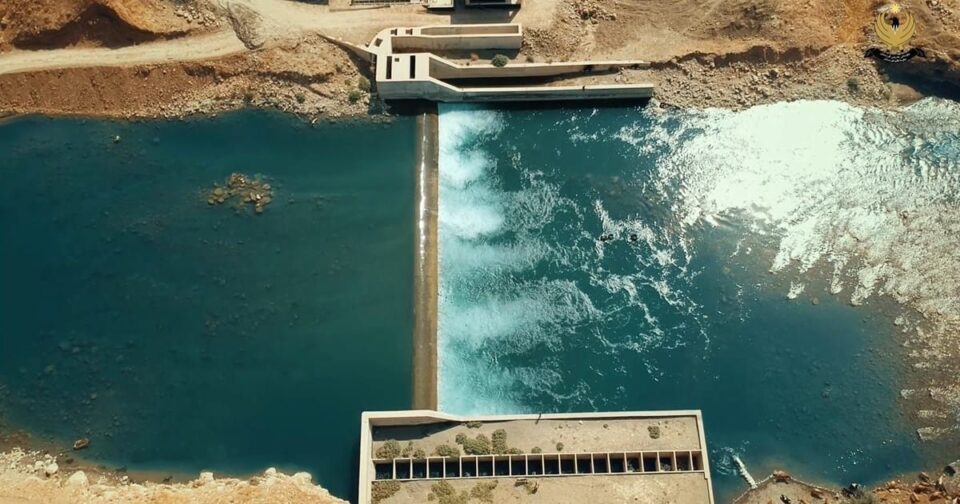
Dozens of strategic projects boost clean water supply across the Kurdistan Region as major investments target sustainable access and groundwater protection.
The Kurdistan Regional Government (KRG) has carried out a major expansion of its water infrastructure as part of a long-term strategy to address water scarcity and ensure reliable access to clean drinking water across the Kurdistan Region.
Through a series of large-scale projects and modern treatment facilities, millions of cubic meters of potable water are now supplied daily to households in urban and rural areas.
According to official figures, the Region currently operates 25 major filtration stations and strategic water projects, supported by 4,946 wells and 536 springs. Together, these sources provide an average of 2,564,000 cubic meters of clean water per day, supplying cities, towns, and villages across the Region.
Over the past five years, several key infrastructure projects have been completed, including the Erbil Emergency Water Project as well as major developments in Qushtapa, Pirmam, and Barzan. These initiatives have significantly reduced long-standing water shortages and contributed to the decommissioning of more than 1,000 water wells, a move aimed at protecting groundwater reserves.
The KRG is also continuing work on a number of ongoing strategic projects across the Region. These include the Goptepe–Chamchamal Water Project, water supply systems in Akre, Khanke, Rania, Bardarash, and Darbandikhan, the installation of a third Dukan–Sulaymaniyah pipeline, and the Erbil wastewater recycling project.
Additional projects for Koya, Soran, and Kalar are scheduled to begin in the near future. Officials say that once these initiatives are completed, the Kurdistan Region will move significantly closer to the final stage of resolving its chronic water scarcity challenges through sustainable and modern infrastructure.