
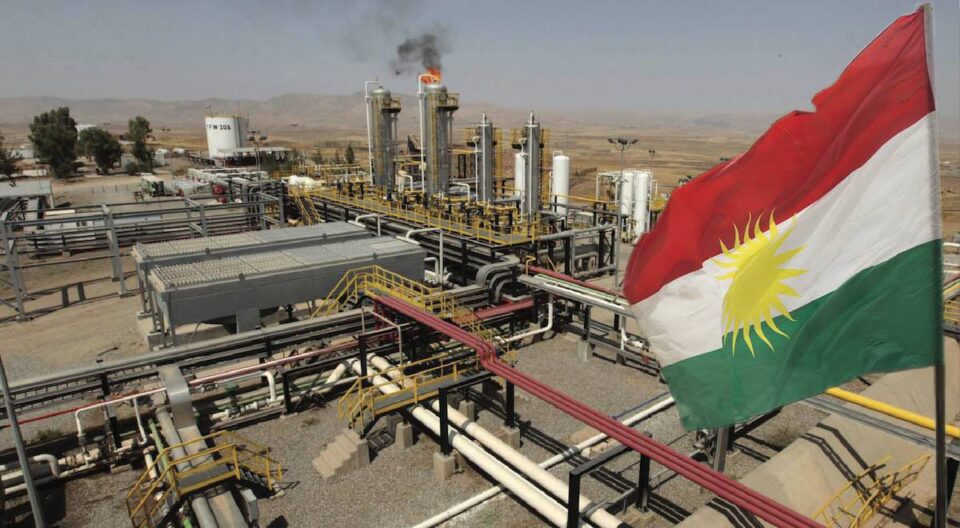
Iraq and Kurdistan agreed to restart vital Kurdistan oil shipments following successful, dispute-free bilateral talks.
Breakthrough in Baghdad
In a major breakthrough, the Kurdistan Regional Government (KRG) and the federal government of Iraq have reached a comprehensive, dispute-free agreement to immediately resume Kurdistan oil exports through Turkey’s port of Ceyhan. The decision was finalized during a high-level official summit held in the capital city on Wednesday, June 3, 2026. The critical meeting brought together Iraqi Federal Prime Minister Ali Faleh Zaidi and a senior KRG executive delegation to resolve ongoing economic bottlenecks. Both leadership teams described the atmosphere of the talks as highly positive, constructive, and deeply rooted in a shared mutual understanding of the country’s broader economic needs.
The high-level Kurdish delegation traveling to Baghdad was led by Kamal Mohamed Salih, the KRG’s Acting Minister of Natural Resources. He was joined by key regional administrative figures, including Omed Sabah, the President of the Diwan of the Council of Ministers, and Amanj Rahim, the Secretary of the KRG Council of Ministers. To ensure a thorough and practical solution to regional industry bottlenecks, the Kurdish representatives traveled alongside executive delegates from several foreign oil production companies operating inside the region. On the federal side, Prime Minister Zaidi hosted the discussions accompanied by a comprehensive ministerial team, which included Iraq’s federal Minister of Foreign Affairs, the federal Minister of Oil, the Military Chief of Staff, and an official leadership team representing the State Organization for Marketing of Oil (SOMO).
Eliminating production hurdles
An informed diplomatic source close to the negotiations confirmed to reporters that the two governing bodies did not disagree on a single policy item during the summit. Instead, both sides stood entirely united on the urgent economic necessity of getting Kurdistan crude oil moving back into international markets as quickly as possible. During the roundtable discussions, Prime Minister Zaidi gave his explicit personal guarantee to both the KRG leadership and the attending representatives of the foreign oil firms that the federal government would systematically address and eliminate all operational, legal, and financial grievances currently stifling the energy sector.
The primary objective of these federal guarantees is to foster a highly stable, cooperative, and reliable business environment in Kurdistan. By resolving these deep-seated problems, authorities aim to swiftly push the Kurdistan Region’s daily oil exports through the transnational Ceyhan pipeline back to its maximum historical capacity. In direct response to these commitments, the KRG delegation gave its firm word to the Prime Minister, expressing complete operational readiness to facilitate all necessary field logistics, streamline administrative steps, and aggressively boost export volumes moving toward the Turkish border.
New security and field protections
A cornerstone of the new agreement centers on addressing the volatile security situation that has compromised energy infrastructure in recent months. To guarantee the physical safety of vital oil fields and reassure corporate investors, Prime Minister Zaidi announced immediate military actions. The Prime Minister has officially directed several high-ranking federal military commanders to conduct an emergency visit to the Kurdistan Region during the upcoming week. Their explicit mission is to launch a comprehensive joint field investigation alongside local Kurdish security forces to permanently neutralize the localized security threats that have disrupted foreign production operations.
By implementing these strategic security measures, the federal government aims to build a robust safety perimeter around Kurdish energy assets. Prime Minister Zaidi issued strict directives to all relevant national security agencies to provide every necessary logistical asset to safeguard corporate operations. Following these extensive safety assurances, the federal government issued a major policy directive decreeing that all foreign and domestic oil companies operating within the Kurdistan Region are permitted and encouraged to fully resume their field operations. This coordinated effort aims to establish a joint working environment that provides necessary infrastructure protections for long-term production sustainability.
Offsetting severe maritime losses
This unexpected administrative alignment comes at a crucial moment for Iraq’s national treasury, which has faced immense financial strain due to broader geopolitical turbulence. Prime Minister Zaidi pointed out during the summit that Iraq has suffered massive, unsustainable economic losses recently due to regional warfare and the persistent blockade and closure of the strategic Strait of Hormuz. Because the southern maritime trade routes have been heavily compromised, Iraq’s overall public revenue and daily export capacity took a severe hit.
Consequently, both Baghdad and Erbil view the Kurdistan Region land-based Ceyhan pipeline asset not as a point of political leverage, but as a vital economic lifeline for the entire state. Federal energy planners emphasized that national efforts must now be heavily concentrated on compensating for southern maritime losses by maximizing Kurdistan land exports. By eliminating the technical and political barriers that previously restricted Kurdistan output, Iraq plans to rapidly offset its recent deficit through an aggressive increase in daily pipeline volumes.
A path to 500,000 barrels daily
The historical context of the pipeline emphasizes the importance of this latest agreement. Kurdistan Region oil exports through Turkey were originally stopped in 2023 following a highly disruptive ruling by an international court. After a prolonged two-year freeze, the export mechanism was successfully reactivated in the final months of 2025. However, that hard-won progress was short-lived, as escalating regional tensions, security threats, and field safety concerns over the past few months caused Kurdistan Region production levels to sharply decline once again.
According to technical data provided by an insider source within the Iraqi federal Oil Ministry, this secondary drop in Kurdistan output severely damaged the state’s projected public revenue. To fix this fiscal shortfall, expert teams from the Iraqi Oil Ministry, SOMO, and the KRG are now working together in Baghdad to optimize logistics. The joint technical teams have established a concrete operational target to safely boost daily Kurdistan export volumes to a steady 500,000 barrels per day. Officials from both governments concluded that transforming this temporary breakthrough into a sustainable economic reality will require continuous coordination, strict adherence to the newly signed security protocols, and an unyielding commitment to national economic unity.
The Kurdish Globe