
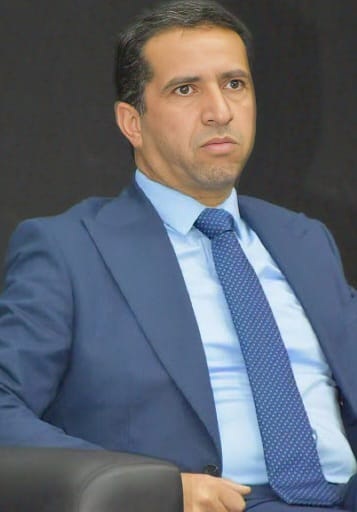
By Hiwa Majid Khalil
On February 15, 2020, Iraq’s Federal Court issued a sudden, binding ruling on the Kurdistan Region’s oil and gas dealings, declaring that all operations by the KRG and by foreign and local companies in this sector were unlawful. The court also called for scrapping the Region’s 2007 oil and gas law. Beyond damaging the Kurdistan Region’s economy, this ruling opened the door for Baghdad to take further steps that could isolate and weaken the Kurdistan Region’s political standing.
The core issue is that the Federal Court has itself become politicized. There’s nothing unusual about a court’s formation reflecting the broader political landscape — but it’s a different matter entirely when the court becomes a tool of politics. As things stand, the Federal Court is split along party lines, which naturally raises doubts about the legitimacy of its rulings. Understanding how Iraq’s political process works, then, is essential to understanding how its Federal Court actually functions.
Iraq’s constitution, drafted in 2005, established a federal system. Its goals went beyond distributing power among Iraq’s regions and safeguarding communities’ political and cultural rights — it was also meant to set out how revenue would be shared and how authority over extracting, managing, selling, and distributing natural resources would be divided between federal, regional, and local governments. A key intent was to stop Baghdad from once again concentrating military and political power the way it had under Saddam Hussein.
In practice, the court’s decision has damaged the Kurdistan Region’s economy across the board — infrastructure, rebuilding efforts, and public salaries have all suffered. It has also given Baghdad grounds to withhold budget transfers until the two governments settle their dispute, and to delay employee salary payments, citing disagreements over non-oil revenue. This puts pressure on the KRG domestically and even limits ordinary Kurdish citizens’ ability to cover daily expenses. Less money circulating in the KRG’s markets weakens the very foundation any economy depends on — and it’s the Region’s citizens and its public services that bear the brunt of this economic standoff.
The court ruling has also left the Kurdistan Region without a budget. At the same time, there’s no getting around certain realities: the Region is part of Iraq, the dinar is the shared currency across both, and the Central Bank of Iraq’s decisions apply to the Region as well — meaning the KRG’s finances remain tied to Iraq’s broader economic system. Given this, the Region’s best first move is to pursue dialogue with Baghdad. Since the Kurdistan Region is currently working through an economic transition — aiming for recovery and more diverse revenue sources — it would be wise to steer clear of political and economic instability wherever possible. Resolving the Erbil-Baghdad dispute through diplomacy, negotiation, and outside mediation, where needed, would serve both sides best.