
By Younes Mohammad
During the years I spent photographing war, I met countless people who had survived death. Some had been pulled from beneath collapsed buildings, some had escaped captivity, and some still carried bullets inside their bodies. Most spoke of homes that no longer existed, loved ones who never returned, or lives that had come to an abrupt halt. So that day, I expected another story like the others.
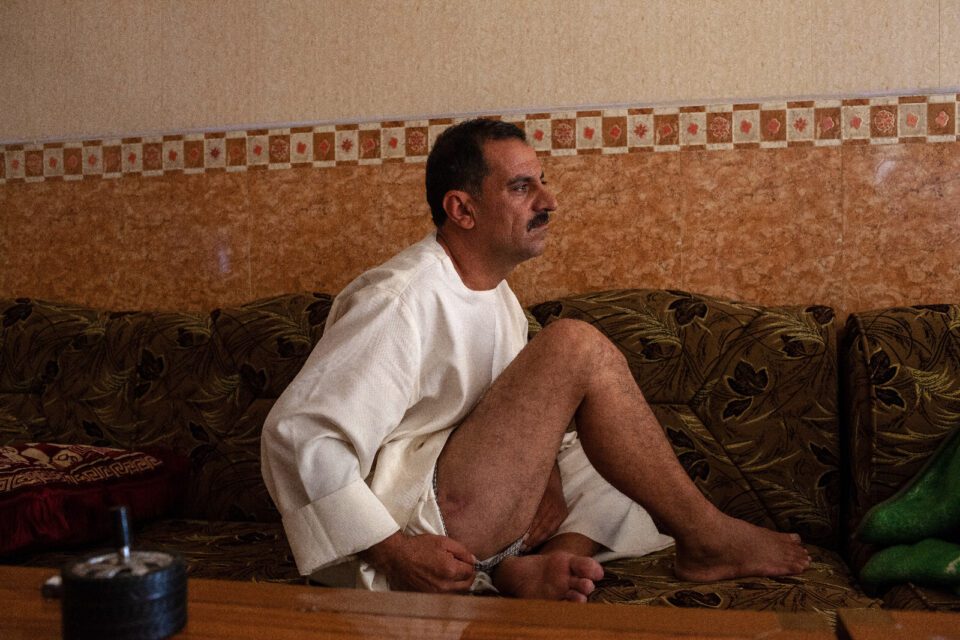
He was sitting on a sofa in a modest room. The late afternoon light filtered through the curtains, and the slow shadow of the ceiling fan drifted across his pale face. He had only recently returned from the edge of death, and his wound was still fresh. “Are you in pain?” I asked. He looked down for a moment before replying. “I don’t know where my wife and children are.” At that instant, I realized I had been looking at the wrong wound. Then he began to speak.
“I woke up because of the noise. When I opened my eyes, I realized I was in a hospital. From the way people spoke, I could tell I was in Mosul.” A few beds away lay wounded ISIS fighters, the very men who had lined him up with the other men from his village and opened fire only hours earlier. He pretended to be unconscious. In that hospital, being awake could be fatal. “That day they took the men out of the village in groups,” he continued.
I knew he was talking about Kocho. “When the bullets hit me, I fell among the others.” After the massacre, fighter jets roared overhead, creating just enough chaos for him to escape. He dragged himself out from beneath the bodies and crawled into a shallow depression. From there, he watched two wounded men try to flee. Both were shot dead. He watched ISIS fighters walk among the bodies, firing final shots into anyone still alive.
Then the bulldozers arrived. They buried everyone where they lay, fathers, brothers, uncles, neighbors, and friends who had been alive together only hours before. He could do nothing but watch. The slightest movement would have meant his own death.
After nightfall, sometimes crawling, sometimes limping, he reached a nearby village. He knocked on several doors, but fear had already settled over every household. Helping a wounded Yazidi man could cost an entire family their lives.
Finally, one man returned carrying a mobile phone. “Call anyone you know.” He dialed every number he could remember. No one dared to come. Weak from blood loss, he eventually lost consciousness. Later, that same man took him to Mosul, to the very hospital where he awoke among wounded ISIS fighters. Before dawn, sympathetic locals secretly smuggled him out, hid him for several days, and eventually helped him escape the city. At last, he reached Baadre.
Now that same man was sitting across from me. When he finished speaking, I was no longer looking at his wound. I was looking at a man who had survived a firing squad, watched those closest to him buried before his eyes, and awakened beside the men who had tried to kill him. “What will you do now?” I asked. He met my eyes. “I’m going to find my wife and children. I’ll bring them back.” He didn’t say it like a wish. He said it like a fact.
Over the following months, each time we spoke, another piece of that future became real. First he found one member of his family. Then another. Then several more. Just as he had promised, he brought them home one by one. A few months later, I visited him in an apartment in Duhok. The room was filled with women and men holding photographs of missing loved ones. At first, I assumed they had come to see him. Then I realized they had come because they needed his help.
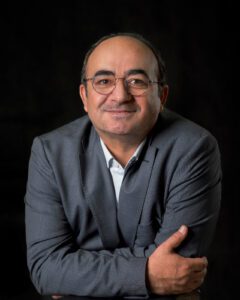
Idris studied every photograph, asked questions, listened carefully to every name and every clue. The journey he had begun to find his own family had become a path that was leading others home. Years later, I learned that he had helped rescue hundreds of Yazidi women and children from ISIS captivity. Then came the news that he had received the Mother Teresa Award.
That day I looked again at the old photograph I had taken years earlier, a man sitting quietly on a sofa, a fresh wound on his body, and a family whose whereabouts he still did not know. Back then, I believed I had photographed a survivor. It took me years to understand that he had not simply returned from death. He had returned to bring others back to life.